


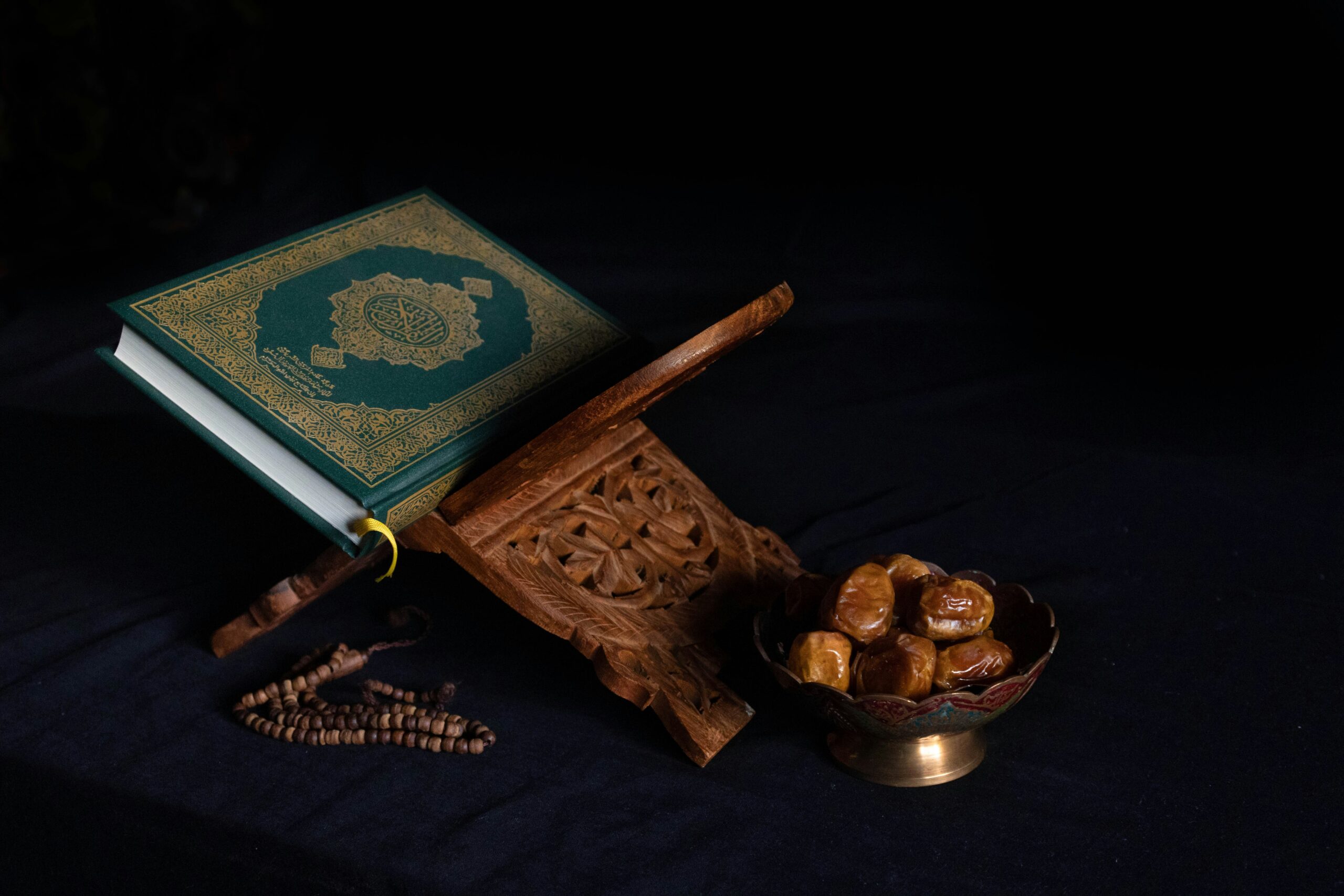
As the Islamic calendar approaches the blessed month of Ramadan, the believer enters a season shaped by reflection, discipline, and divine mercy. Ramadan is a time when believers are called to renew their relationship with their Creator through worship, self-reflection, and sincere striving in His path.
The Holy Qur’an presents Ramadan as a period in which believers can draw closer to Allah through moral upright conduct, worship, self-reform, and devotion. It offers every believer the opportunity to pursue a humble spiritual ascent through prayer, fasting, and the remembrance of Allah the Almighty.
In this sense, Ramadan is not merely a month marked by abstaining from food and drink. Rather, it is a time for spiritual growth and transformation, inviting believers to cultivate greater mindfulness of Allah and to strengthen their devotion to Him through sincere effort and discipline.
Ramadan as a Qur’anic Mandate
The Holy Qur’an introduces fasting as a means of cultivating taqwa—a deep awareness of Allah and a conscious commitment to righteousness. Allah the Almighty states:
يَا أَيُّهَا الَّذِينَ آمَنُوا كُتِبَ عَلَيْكُمُ الصِّيَامُ كَمَا كُتِبَ عَلَى الَّذِينَ مِن قَبْلِكُمْ لَعَلَّكُمْ تَتَّقُونَ
“O ye who believe! Fasting is prescribed for you, as it was prescribed for those before you, so that you may become righteous.” [2:184]
Allah the Almighty wants believers to become more mindful of Him and grow closer to Him, and fasting is a means to help increase worship, self-discipline, and spiritual awareness. Ramadan becomes a month of inner refinement, where the heart is trained to recognize its own tendencies and to respond with humility and sincerity.
The Holy Qur’an reminds believers that fasting was never intended to impose hardship; rather, ease. As the Holy Qur’an states:
يُرِيدُ اللهُ بِكُمُ الْيُسْرَ وَلَا يُرِيدُ بِكُمُ الْعُسْرَ
“Allah desires to give you facility and He desires not hardship for you.” [2:186]
This framing establishes Ramadan as a month of mercy, forgiveness, and compassion, where the believer is encouraged to approach the discipline of fasting with gratitude and hope.
The Month of Revelation and Renewal
Ramadan is also the month in which the Qur’an itself was revealed, described as:
هُدًى لِّلنَّاسِ وَبَيِّنَاتٍ مِّنَ الْهُدَىٰ وَالْفُرْقَانِ
“A guidance for mankind with clear proofs of guidance and discrimination.” [2:186]
This transforms the month into a season of illumination or nur. The believer is invited to return to the Holy Qur’an not merely as a text to be recited, but as a living source of comfort, clarity, and direction.
The descent of the Holy Qur’an during Ramadan is a reminder that divine guidance is not distant; it is accessible, transformative, and meant to shape the believer’s daily life for betterment. In this sense, Ramadan becomes a month of revelation and renewal, where the heart is softened and the mind is re-centred upon divine truth.
Gratitude as a Spiritual Posture
The Holy Qur’an also links fasting to gratitude. It states:
وَلِتُكْمِلُوا الْعِدَّةَ وَلِتُكَبِّرُوا اللهَ عَلَىٰ مَا هَدَاكُمْ وَلَعَلَّكُمْ تَشْكُرُونَ
“And that you may complete the number, and that you may exalt Allah for His having guided you and that you may be grateful.” [2:186]
Gratitude in the Qur’anic sense is not a passive emotion but a spiritual posture that transforms one’s relationship with Allah and with creation. Ramadan trains the believer to recognize blessings that are often overlooked and to cultivate a heart that responds with humility and appreciation.
Purification, Patience, and Compassion
Beyond the verses that explicitly mention fasting, the Holy Qur’an teaches many beautiful lessons, and Ramadan allows believers to experience them in their deepest form throughout the month.
The purification of the heart is one such theme. The Qur’an repeatedly emphasizes that true success belongs to those who purify themselves. As it states:
قَدْ أَفْلَحَ مَن زَكَّاهَا
“He indeed truly prospers who purifies it.” [91:10]
Ramadan becomes a month of tazkiyah, the cleansing of the heart from arrogance, resentment, and heedlessness.
Steadfastness is another virtue that the Qur’an elevates, describing it as a quality that brings divine companionship:
وَاصْبِرُوا ۚ إِنَّ اللهَ مَعَ الصَّابِرِينَ
“And be steadfast; surely, Allah is with the steadfast.” [8:47]
Charity, Salat, and compassion also come to the forefront during Ramadan, as the Qur’an describes righteousness:
لَّيْسَ الْبِرَّ أَن تُوَلُّوا وُجُوهَكُمْ قِبَلَ الْمَشْرِقِ وَالْمَغْرِبِ وَلَٰكِنَّ الْبِرَّ مَنْ آمَنَ بِاللّهِ وَالْيَوْمِ الْآخِرِ وَالْمَلَائِكَةِ وَالْكِتَابِ وَالنَّبِيِّينَ وَآتَى الْمَالَ عَلَىٰ حُبِّهِ ذَوِي الْقُرْبَىٰ وَالْيَتَامَىٰ وَالْمَسَاكِينَ وَابْنَ السَّبِيلِ وَالسَّائِلِينَ وَفِي الرِّقَابِ وَأَقَامَ الصَّلَاةَ وَآتَى الزَّكَاةَ وَالْمُوفُونَ بِعَهْدِهِمْ إِذَا عَاهَدُوا ۖ وَالصَّابِرِينَ فِي الْبَأْسَاءِ وَالضَّرَّاءِ وَحِينَ الْبَأْسِ ۗ أُولَٰئِكَ الَّذِينَ صَدَقُوا ۖ وَأُولَٰئِكَ هُمُ الْمُتَّقُونَ
Fasting softens the heart, making it more aware of the struggles of others and the weaknesses within ourselves, and it strengthens the bonds of community for Muslims everywhere in the world.
The Quiet Power of Night Worship
Late-night worship gains renewed significance during Ramadan. The Qur’an praises those who rise at night seeking forgiveness and nearness to Allah [73:2–11].
Ramadan revives this practice through Tahajjud and Tarawih, offering quiet hours of reflection, healing, and spiritual intimacy. In these moments, the believer experiences a tranquillity rarely found in the busyness of ordinary days.
Prayer of the Night of Destiny (Lailatul Qadr)
Hadrat Aisha (may Allah be pleased with her) once asked the Holy Prophet (peace and blessings of Allah be upon him) which prayer she should recite if she were to find Lailatul Qadr. The Holy Prophet (peace and blessings of Allah be upon him) taught her this supplication:
اَللّٰهُمَّ إِنَّكَ عَفُوٌّ كَرِيمٌ تُحِبُّ الْعَفْوَ فَاعْفُ عَنِّي
“O Allah, You are the Most Forgiving, the Noble. You love to forgive, so forgive me.” [Jami Tirmidhi, Hadith 3513]
This simple yet profound prayer captures the essence of Lailatul Qadr — a night of mercy, forgiveness, and divine nearness.
This prayer is included in Treasure House of Prayers [pp. 73–74], where readers will find additional supplications related to forgiveness. The book further contains other essential supplications, including the prayer for seeing the new moon and the supplications for beginning and ending the fast.
A Timely Reminder from Hazrat Khalifatul-Masih V
In his Friday Sermon on March 7, 2025, Hazrat Khalifatul-Masih V (may Allah be his Helper) offered a reminder that resonates deeply with the ethos of Ramadan. He stated:
“God listens to the prayers of those who are patient and who do not say that they have been praying a great deal but God has not answered them.”
His Holiness further explained that turning to Allah only for worldly needs limits the depth of one’s relationship with Him. True nearness, he emphasized, is attained when a believer seeks Allah for His sake alone, not merely for personal gain. This guidance beautifully complements the Qur’anic spirit of Ramadan, a month in which the believer learns to pray with sincerity, patience, and trust.
Eid-ul-Fitr Salat and Fitrana
Eid Salat is also an important part of worship in Islam. Muslims around the world gather in the mosque to offer it on 1 Shawwal. It is a day for increased worship. Where there are normally five obligatory prayers in a day, on Eid there are six.
Thus, Eid holds special significance. The Holy Prophet (peace and blessings of Allah be upon him) has stated that one who offers prayers on the nights of the two Eids, his heart will be granted eternal life. [Sunan Ibn Majah, Hadith 1782]
On this day, special invocations known as takbirat are recited from sunset on the last day of Ramadan (i.e., the first day of the month of Shawwal) until the Imam rises to lead the Eid prayer. The invocation is:
اللّٰهُ أَكْبَرُ، اللّٰهُ أَكْبَرُ، لَا إِلٰهَ إِلَّا اللّٰهُ، وَاللّٰهُ أَكْبَرُ، اللّٰهُ أَكْبَرُ، وَلِلّٰهِ الْحَمْدُ
“Allah is the Greatest, Allah is the Greatest. There is none worthy of being worshipped but Allah; Allah is the Greatest, Allah is the Greatest, and to Him belongs all praise.”
There is also a mandatory financial contribution for this day, known as Sadaqat-ul-Fitr/Zakat-ul-Fitr or Fitrana. Allah has commanded every Muslim who has more food than he needs for the day and night of the feast to give a measure of one saa (approximately three litres) of food—such as wheat or rice—or its equivalent in money to needy Muslims so that no one is left without food on this day. The amount should be paid or distributed before the sermon of Eid begins. [“The Fourth Pillar of Islam: Saum, The Islamic Fast,” Review of Religions, 25 October 2020]
Six Fasts of Shawwal
Muslims are forbidden to fast on Eid. However, one may follow the day of Eid-ul-Fitr with six days of voluntary fasting during the Islamic month of Shawwal. The Holy Prophet (peace and blessings of Allah be upon him) is reported to have said that whosoever does so will be rewarded as if they had fasted perpetually. [Sahih Muslim, Hadith 1164a]
May this Ramadan bring abundant blessings to all believers.


