



The grand prophecy of the Promised Messiah (peace be upon him) regarding the Promised Reformer (Musleh-e-Mau’ud) has often been subject to certain interpretations. Some argue that the Promised Reformer mentioned in the prophecy was not meant to be from the biological progeny of the Promised Messiah (peace be upon him) but rather from his spiritual progeny.
Those who make such claims base their argument on the following words of the prophecy:
“A pure son [Zaki Ghulam] will be granted to you.”
They argue that since the Promised Messiah (peace be upon him) received this revelation up until 1907, that foretold boy was not born by 1907. Consequently, they claim that Hazrat Mirza Bashir-ud-Deen Mahmood Ahmad (may Allah be pleased with him), who was born on January 12, 1889, could not have been the Promised Reformer, as prophecies do not continue after the birth of the foretold person. Furthermore, they contend that the terms Ghulam (Arabic for ‘boy’ or ‘son’) and Beta (Urdu for ‘son’) signify two distinct individuals. In other words, according to their interpretation, the Ghulam mentioned in the prophecy refers to a separate individual, while the son refers to another. Hence, they conclude that the Ghulam mentioned in the prophecy was not meant to be from the biological lineage of the Promised Messiah (peace be upon him).
The following three claims have been made in their narrative:
- The boy had not been born by 1907: Since the revelation “A pure son will be granted to you” was revealed to the Promised Messiah (peace be upon him) until 1907, it is asserted that this proves the foretold boy had not been born up to that point.
- Hazrat Mirza Bashir-ud-Deen Mahmood Ahmad (may Allah be pleased with him) does not fulfill the prophecy: Since Hazrat Mirza Bashir-ud-Deen Mahmood Ahmad (may Allah be pleased with him) was born before 1907, their argument concludes that he could not be the fulfillment of the prophecy, because revelations about a foretold individual do not occur after their birth.
- The terms Ghulam and Beta ـrefer to two distinct individuals: According to this argument, the prophecy mentions two separate entities — a Beta (son) as one and Ghulam (servant) as another. Consequently, they claim that the Ghulam in the prophecy was not to be from the biological progeny of the Promised Messiah (peace be upon him).
Response to the First Claim
“Since this revelation continued until 1907, the boy had not been born up to that point.”
Such a principle does not exist anywhere. Therefore, the question arises: Where did they derive this principle from? Is there any principle in the Holy Qur’an regarding this matter? Did the Holy Prophet (peace and blessings of Allah be upon him) ever state such a principle? Did the Promised Messiah (peace be upon him) ever indicate that if a prophecy continues to be revealed, it implies that the foretold individual has not yet been born?
Such self-made principles are typical of deniers. One only needs to look at Surah Bani Isra’il (17:91–94) to see the various false principles and criteria the deniers of the Holy Prophet (peace and blessings of Allah be upon him) crafted to reject him. It is always the deniers who invent false principles for denial. This is their fate. Truth dispels falsehood; falsehood cannot extinguish truth.
The claim that this prophecy was reiterated until 1907, and therefore, the Promised Reformer had not been born, is a baseless attempt to cloud the prophecy. In fact, such revelations often serve to establish the grandeur of an important prophecy. Hence, no limits can be imposed on the descent of glad tidings. For example, the Holy Prophet (peace and blessings of Allah be upon him) gave the Ummah glad tidings regarding his son Ibrahim (may Allah be pleased with him) even after his demise, stating that he would have been a prophet if he had lived. This shows that glad tidings can be given not only after birth but even after death.
Thus, to claim that because this revelation continued until 1907, it means the foretold individual had not been born is false. Just as Allah the Almighty, before the birth of the promised son, caused a daughter and then a son to be born — who were not the fulfillments of this prophecy — thereby reinforcing the significance and grandeur of this prophecy from all angles, He continued to reiterate this prophecy as a reminder of its significance and grandeur.
Response to the Second Claim
“Since Hazrat Mirza Bashir-ud-Deen Mahmood Ahmad (may Allah be pleased with him) was born before 1907, he could not be the fulfillment of the prophecy, because revelations about a foretold individual do not occur after their birth.”
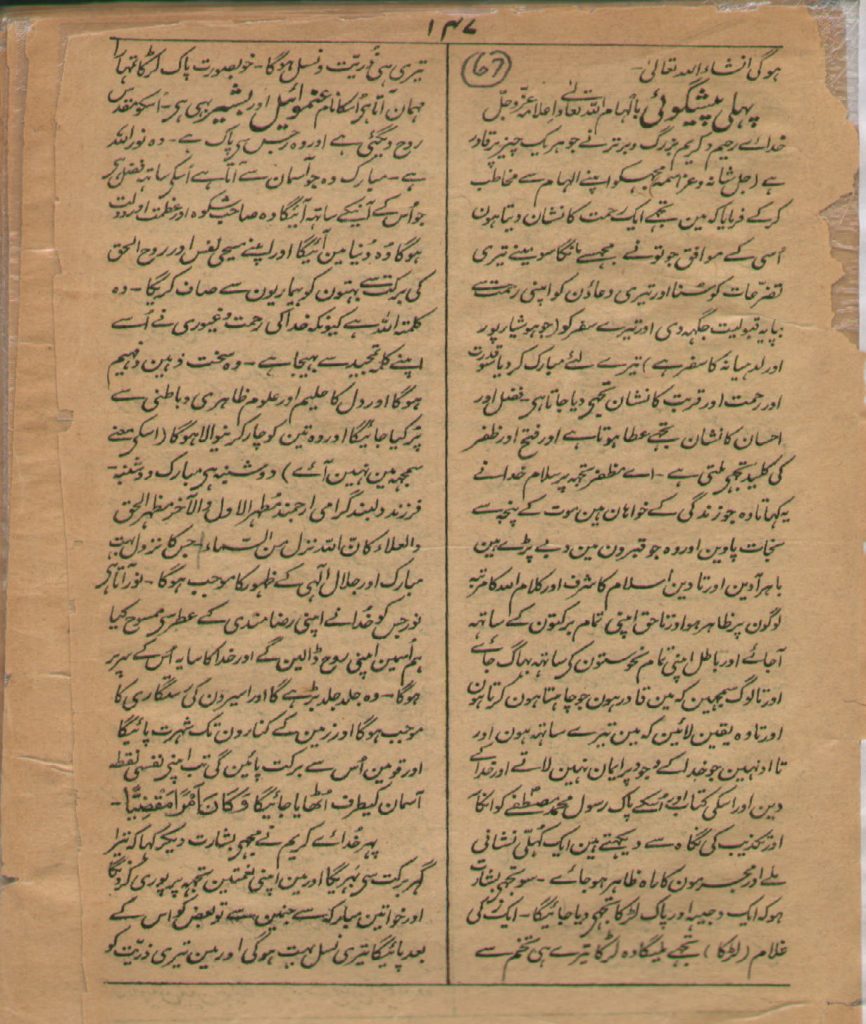
The nature of these revelations also indicates that the following phrase is fundamentally a part of the prophecy:
“Rejoice, therefore, that a handsome and pure boy will be bestowed on you; you will receive a pure son [Zaki Ghulam] who will be of your seed and will be of your progeny.”
If these continuous revelations suggest that this Zaki Ghulam or ‘pure son’ was to be born at some point after Hazrat Musleh-e-Mau’ud (may Allah be pleased with him), then this prophecy also confines and limits that future individual to being from the lineage and progeny of the Promised Messiah (peace be upon him). It does not extend beyond his seed, lineage, or progeny.

Later, revelations were also received regarding every son or ghulam born from the progeny of the Promised Messiah (peace be upon him), who was destined to carry forward his mission. Thus, after the true and primary fulfillment of the prophecy — Hazrat Sahibzada Mirza Bashir-ud-Deen Mahmood Ahmad, Musleh-e-Mau’ud, Khalifatul-Masih II (may Allah be pleased with him) — three additional Zaki Ghulams (pure sons) have been granted to the Promised Messiah (peace be upon him):
- Hazrat Sahibzada Mirza Nasir Ahmad, Khalifatul-Masih III (may Allah have mercy upon him),
- Hazrat Sahibzada Mirza Tahir Ahmad, Khalifatul-Masih IV (may Allah have mercy upon him), and
- Hazrat Sahibzada Mirza Masroor Ahmad, Khalifatul-Masih V (may Allah be his Helper).
This prophecy, therefore, has been fulfilled in this manner with great clarity.
Whether it is a son, grandson, great-grandson, or maternal grandson, they are all considered part of the progeny and are referred to as Ghulam (son) in Arabic or Beta (son) in Urdu. Thus, through these three Ghulams or sons, Allah the Almighty has also fulfilled the critic’s objection.
Thus, if anyone was destined to come later, they too would be the Zaki Ghulams from the seed, lineage, and progeny of the Promised Messiah (peace be upon him). To understand this aspect, one should also consider that from 1865 to 1906, the Promised Messiah (peace be upon him) received the following revelation multiple times as a reminder:
“You shall see a distant progeny.”
This has two meanings: (i) you will see your distant progeny, and (ii) you will see your progeny extending far.
The purpose of this was to remind the Promised Messiah (peace be upon him) repeatedly about the pure sons who were to come from his seed, lineage, progeny, and offspring in the future. Since the glad tidings of the Zaki Ghulam were confined, limited, and specified within the seed, lineage, progeny, and offspring of the Promised Messiah (peace be upon him), this prophecy was destined to be fulfilled repeatedly within his progeny.
Glad Tidings After the Birth of One Foretold
Next, it is claimed that Hazrat Mirza Bashir-ud-Deen Mahmood Ahmad (may Allah be pleased with him) was born before 1907, and therefore, he does not fulfill the prophecy because glad tidings are not received after the birth of the foretold individual.
The Holy Qur’an completely refutes this claim. According to the Holy Qur’an, the Holy Prophet (peace and blessings of Allah be upon him) was destined to make the religion of truth prevail over all other religions. Allah the Almighty states:
He it is Who has sent His Messenger with guidance and the Religion of Truth, that He may cause it to prevail over all religions.
This verse was revealed in the Qur’an on three separate occasions: in Surah At-Taubah [9:33], Surah Al-Fath [48:29], and Surah As-Saff [61:10].
The Holy Prophet (peace and blessings of Allah be upon him) was the primary fulfillment of this prophecy. He had already been born, Allah had already bestowed prophethood upon him, and through him, Islam’s dominance had already begun. Despite this, the same verse was repeatedly revealed to him.
Secondly, prophecies mentioning specific attributes of an individual are deferred until those attributes are manifested, even if the individual has already been born. The manifestation of those attributes does not necessarily occur at birth; rather, each attribute reveals itself at its appropriate time and place. Therefore, the prophecy is deemed fulfilled when the attributes in the prophecy become manifest. Until then, the repetition of the prophecy serves as a reminder and underscores its importance.
Thus, the promised child, who had already been born, fulfilled the prophecy when his attributes and other foretold qualities became evident. Since Allah the Almighty intended to manifest these attributes gradually, as the Promised Messiah (peace be upon him) stated, they would appear as a result of “nearness to Allah and divine revelation.” Consequently, when Allah revealed these qualities in Hazrat Musleh-e-Mau’ud (may Allah be pleased with him) through divine nearness and revelation, he declared himself to be the complete fulfillment of the prophecy, stating that he alone embodied all its detailed attributes. Although several decades had passed between the prophecy and its announcement, this in no way undermined its truth.
Hence, the claim that glad tidings are not received after the birth of the foretold individual is a baseless assumption that is unrelated to divine prophecies.
The Meaning of ‘Zaki’
To understand this matter, it is essential to reflect on the word Zaki. According to dictionaries, the root of the word, Zaka, means lawful, pure, and blessed with a good end. However, its fundamental meaning relates to growth or increase attained through divine blessings. This growth pertains to both worldly matters and affairs connected to the spiritual or the hereafter.
Imam Raghib (may Allah have mercy upon him) writes:
“لِاَھَبَ لَكِ غُلٰمًا زَكِىًّا That I may give you a pure son. (19:20) This means that the boy will not become pure on his own but will be made pure by Allah. That is, he will be inherently pure. As we have previously explained, inherent purity is attained through divine selection (ijtaba) whereby Allah the Almighty grants His special servants knowledge and pure morals. This purity is not achieved through learning, effort, or practice but solely through divine favour, as is often the case with prophets and messengers. This verse can also mean that the boy will develop pure morals in the future. Therefore, the term زَكِىًّا [zakiyyan; pure/righteous] refers not to the present time but to the future.”
Imam Raghib further elaborates:
“There are two forms of purification of the self (Tazkiyat an-Nafs):
Purification through action (Tazkiyah bil-Fi’l) which involves reforming one’s self through good deeds. This is a praiseworthy method. This what is indicated in the verses: قَدْ اَفْلَحَ مَنْ زَكّٰھَا [‘He indeed prospers who purifies it.’ (91:10)] and قَدْ اَفْلَحَ مَنْ تَزَكّٰى [‘Verily, he, indeed, will prosper who purifies himself’ (87:15)].
Purification through testimony (Tazkiyah bil-Qawl): This occurs when a reliable person bears witness to someone’s goodness. It is deplorable for a person to claim his own goodness and engage in self-praise. Allah has forbidden this kind of self-purification, as stated in the verse: لَا تُزَكُّوْا اَنْفُسَكُمْ ‘Do not claim yourselves to be pure.’ (53:33) This prohibition is corrective because self-praise is neither rationally nor religiously appropriate.”[Mufradat Imam Raghib, under the term zaka]
Thus, according to this explanation, the act of making someone zaki (pure) is solely the work of Allah. The Qur’anic truth لَا تُزَكُّوْا اَنْفُسَكُمْ “Do not claim yourselves to be pure” (53:33) was fundamentally included by the Promised Messiah (peace be upon him) in the context of the fulfillment of this prophecy, indicating that Allah Himself would establish the foretold individual at this station of purity.
The Promised Messiah (peace be upon him) states:
“God has informed me: ‘I shall raise for thy Jama‘at one from thy progeny and shall honour him with My revelation and nearness. Truth will flourish through him and a large number of people accept him.’ So wait for those days.” [The Will (2023), p. 8, footnote]

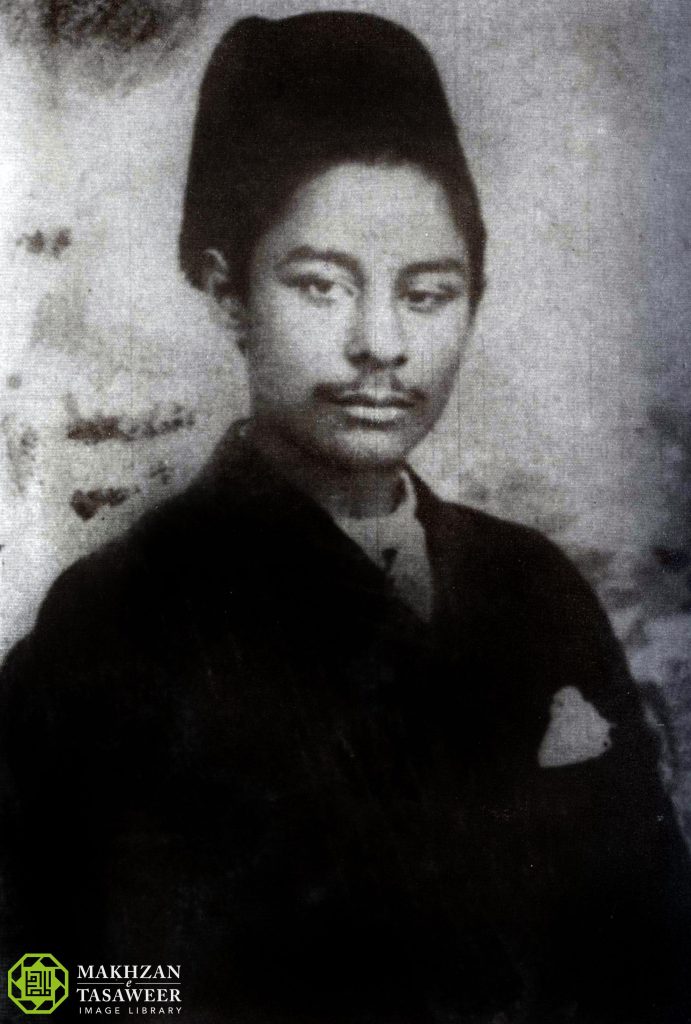
Thus, Allah the Almighty granted the fulfiller of this prophecy—Hazrat Musleh-e-Mau’ud (may Allah be pleased with him)—His nearness in such a manner that in 1905, at the age of 17, he was honoured with the divine revelation:
“Surely, those who follow you will be above those who disbelieve, until the Day of Resurrection.”
Two years later, in 1907, an angel taught him the commentary of Surah Al-Fatihah. Therefore, the nearness to Allah and the honour of receiving divine revelation and inspiration bestowed upon Hazrat Musleh-e-Mau’ud (may Allah be pleased with him) testify to his being the true fulfillment of this prophecy.
An additional definitive proof is the bold and unequivocal declaration of the Promised Messiah (peace be upon him), who proclaimed:
“The second child, whom the revelation refers to as Bashir the Second, and also as Mahmood, has not been born till today, 1st December 1888. But, in accordance with God’s promise, he will most certainly be born within the time stipulated in the prophecy. Heavens and earth may pass, but the word of God can never be averted.” [The Green Announcement (2008), p. 8, footnote]
This was a clear declaration of divine decree: The child who was the true and primary fulfillment of the prophecy of Musleh-e-Mau’ud was to be born within nine years. One of the attributes of this child was Zaki Ghulam (pure son), and that very child was indeed the Zaki Ghulam.
Thus, the Promised Messiah (peace be upon him) stated in A’ina-e-Kamalat-e-Islam:
“Allah the Almighty has given me glad tidings and said: ‘I have heard your supplications and prayers, and I shall grant you what you have asked, and you will be among the favoured ones. And how would you know what I will grant you? It will be a sign of mercy, grace, nearness, triumph, and victory. So, peace be upon you; you are among the victorious. I give you the glad tidings of a son whose name will be Immanuel and Bashir. He will be handsome, highly perceptive, and among the chosen ones. He will come from the heavens, and with his advent, there will be a descent of divine grace. He is light, blessed, pure, and among the purified. … Therefore, I shall soon grant you a pure son (Zaki Ghulam), who will be from your loins, your progeny, and your lineage, and he will be among our chosen servants.’” [A’ina-e-Kamalat-e-Islam, Ruhani Khaza’in, vol. 5, p. 577]
In the same book, the Promised Messiah (peace be upon him), provided the following explanation regarding this prophecy:
“The Holy Prophet (peace and blessings of Allah be upon him) gave the news that the Promised Messiah would marry and have children. In this was an indication that Allah the Almighty would grant him a righteous son who would resemble his father and not oppose him. He would be among Allah’s honoured servants. The wisdom behind this is that Allah only gives glad tidings of progeny to prophets and saints when He has decreed the birth of the righteous.” [A’ina-e-Kamalat-e-Islam, Ruhani Khaza’in, vol. 5, p. 578, footnote]
In A’ina-e-Kamalat-e-Islam, the Promised Messiah (peace be upon him) explained in detail that the prophecy of the Holy Prophet (peace and blessings of Allah be upon him) about the marriage of the Promised Messiah and the mention of children from that marriage refers to his own promised son.
How then can it be possible that the prophecy about the marriage is linked to the Promised Messiah (peace be upon him), but the promised offspring from that marriage, as interpreted by the Promised Messiah (peace be upon him) himself, is disregarded, and instead, offspring born a hundred or more years later to someone else is declared as the fulfillment? Such reasoning not only goes against the intent of the Promised Messiah (peace be upon him) but is also inherently illogical.
The offspring of the Promised Messiah (peace be upon him), which was to result from his foretold marriage, included the promised son who was described in the prophecy as Zaki Ghulam (a pure boy). Given the explanation provided by the Promised Messiah (peace be upon him) himself, it is not possible to consider anyone else as the fulfillment of this prophecy.
In short, when the Promised Messiah (peace be upon him), in accordance with the Hadith, specified, designated, and confined the fulfillment of this prophecy to a child born from his lineage, progeny, loins, and seed resulting from his marriage, no one can remove it from the framework of the interpretation provided by him.
Response to the Third Claim
“The terms ‘Ghulam’ and ‘Beta’ refer to two distinct individuals.”
According to this argument, the prophecy mentions two separate entities — ‘Beta’ (son) as one and ‘Ghulam’ (servant) as another. Consequently, they claim that the Ghulam in the prophecy was not intended to be from the biological progeny of the Promised Messiah (peace be upon him).
The critic has raised an objection but is entirely unaware of the fact that Ghulam is an Arabic word, and Beta is an Urdu word, and both carry the same meaning: son or child.
The following Qur’anic verses illustrate that the terms Ghulam and Beta have the same meaning.
Allah gave glad tidings to Hazrat Ibrahim (peace be upon him) with these words:
Surely, we give you glad tidings of a knowledgeable son (Ghulam). (15:54)
Similarly, Allah said to Hazrat Zakariya (peace be upon him):
Surely, we give you glad tidings of a son (Ghulam). (19:8)
Here, the reference is clearly to a biological son.
To Hazrat Maryam (peace be upon her), the angel said:
So that We may grant you a pure son (Ghulam). (19:20)
To this, Hazrat Maryam (peace be upon her) responded:
How can I have a son (Ghulam)? (19:21)
Here, too, the term Ghulam refers to a son or child, specifically a biological son. No other meaning is possible in these contexts.
From this Qur’anic style, a clear principle emerges: when Allah informs one of His chosen servants of a Ghulam, it refers to a real, biological son.

A Question to the Critic
After this explanation, we ask the critic: According to the Qur’an, Hazrat Ibrahim, Hazrat Zakariya, and Hazrat Maryam (peace be upon them) were all given glad tidings of a Ghulam. They were granted sons. Where, then, according to your interpretation, are the “servants” (Ghulam), if “Ghulam” and “son” are separate entities?
Allah’s Glad Tidings to the Promised Messiahas
Following the same divine principle and Qur’anic wording, Allah informed the Promised Messiah (peace be upon him):
“We give you good news of a gentle son (Ghulam).” [Tadhkirah: English translation (2009), pp. 975–975]
“I give you glad tiding of a pure and righteous son (Ghulam).” [Tadhkirah: English translation (2009), p. 981]
In these revelations, the mention of a Ghulam follows the Qur’anic usage, where Ghulam means “son.” Thus, interpreting it to mean anything other than the promised son is not possible.
This Ghulam is none other than the promised son mentioned in the prophecy of Musleh-e-Mau’ud. No one else can be considered the primary fulfillment of the prophecy. However, sons born in later generations from the distant progeny of the Promised Messiah (peace be upon him) can be secondary fulfilments of these revelations.
The Objection Fails
The objection further collapses when confronted with the fact that the prophecy contains over fifty attributes or signs, all referring to a single individual. Separating one attribute or sign from the rest cannot be justified under any rational or universal principle.
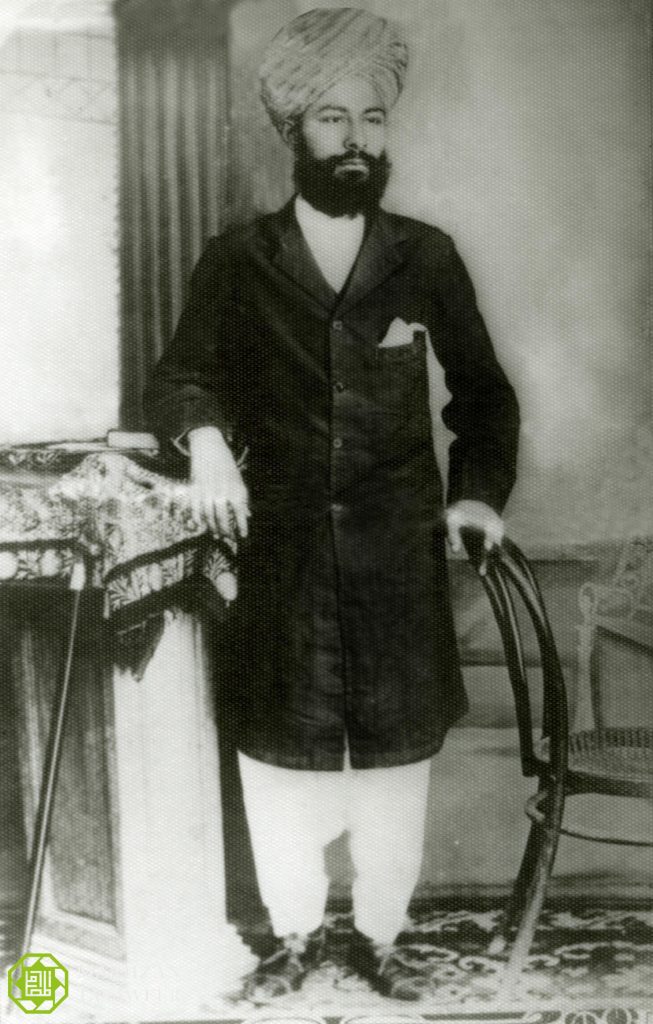
In summary, the attribute and sign of Zaki Ghulam finds its true and original fulfillment in Hazrat Sahibzada Mirza Bashir-ud-Deen Mahmood Ahmad, Musleh-e-Mau’ud, Khalifatul-Masih II (may Allah be pleased with him). There is no other individual to whom it can primarily apply.


