


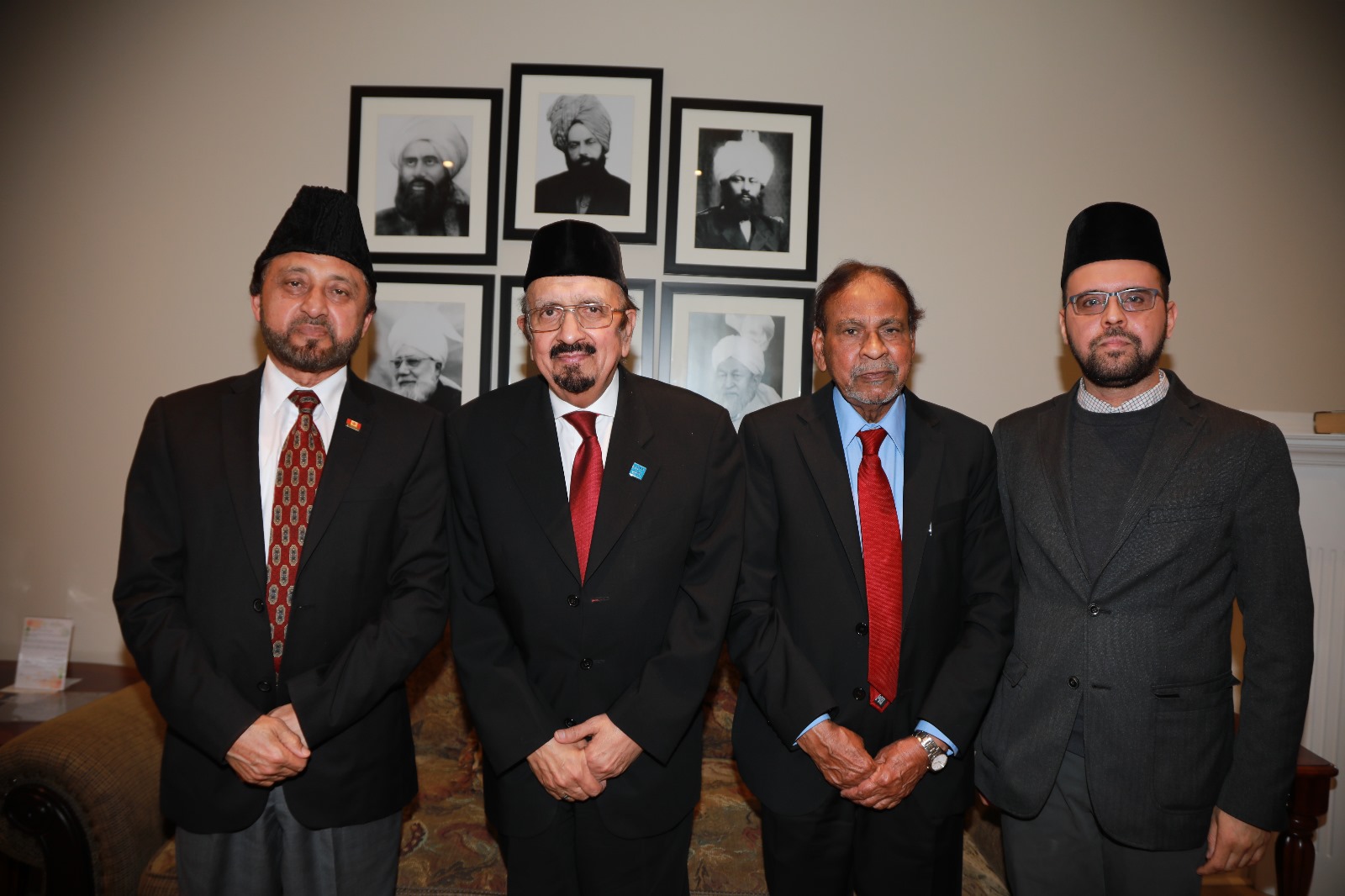
An interview with Professor General (Retd.) Dr. Muhammad Masudul Hasan Nuri on faith, service, and the blessings of obedience.
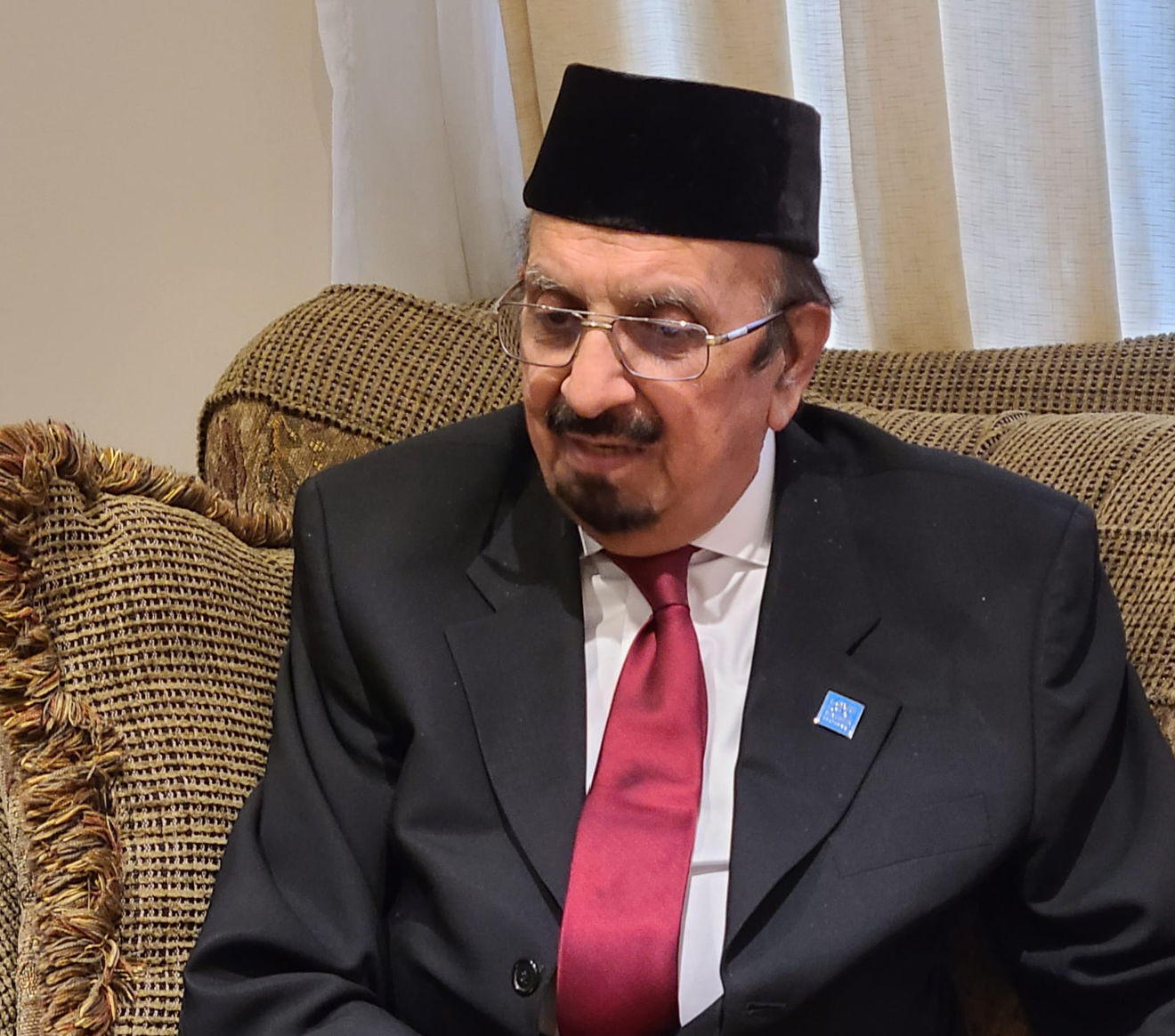
The Ahmadiyya Gazette Canada is pleased to present the transcript of an exclusive interview of the world-renowned Chief Cardiologist of Tahir Heart Institute, Respected Professor General (Retired) Muhammad Masudul Hasan Nuri. The interview was conducted by the Gazette’s editors on October 6, 2024 in Peace Village, Toronto, Canada, while Dr. Nuri was visiting as part of his trip to Canada to receive the Fellowship of the Royal College of Physicians of Canada.
The Gazette is publishing this interview to highlight the blessings attained by those who follow and obey the guidance of Khilafat, and remain fully devoted to the service of faith and humanity.
Ahmadiyya Gazette Canada (AGC): Can you please state your name and title for the record?
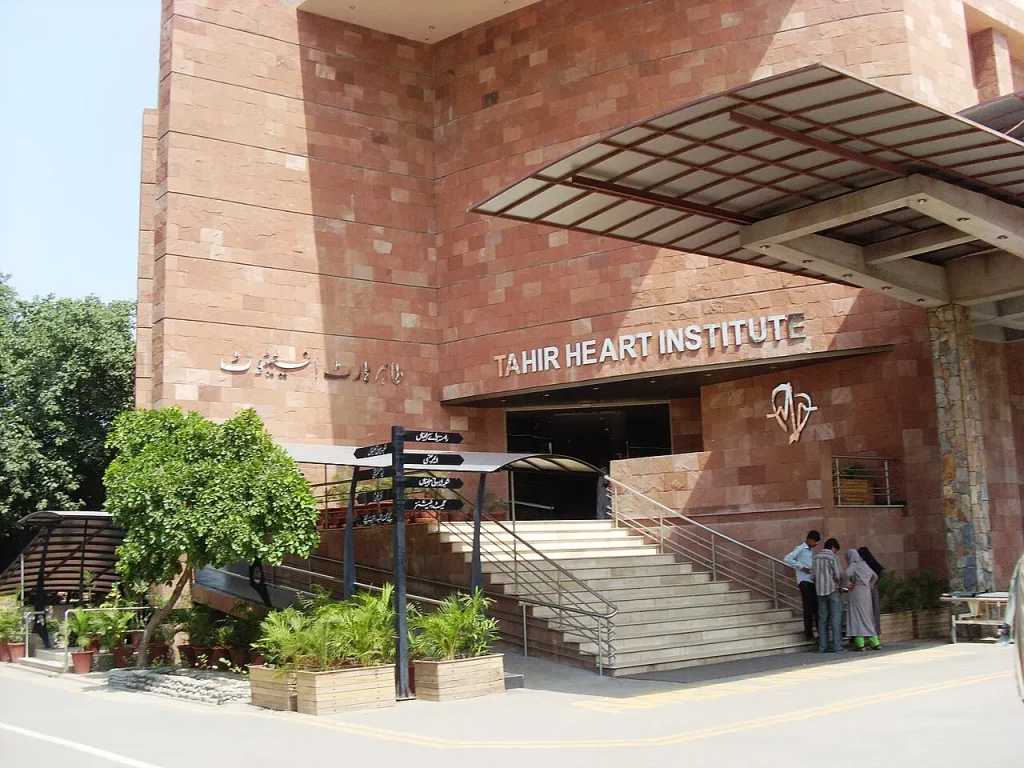
My full name is Professor General (Retired) Muhammad Masudul Hasan Nuri. Presently, I am the Administrator and Chief Cardiologist of Tahir Heart Institute. In other words, the CEO, because Administrator, as such, is the appointment which has been recommended by Huzoor Aqdas. That’s why I said Administrator, and then Chief Cardiologist hence CEO.
AGC: Please give a brief introduction of how you got into the medical field, maybe a background of your services. I understand that you have been serving in the Pakistan Army Corps as well. So, that would be very interesting for our readers. If you could provide a brief background of your journey.
I qualified in medicine in the year 1970, and then after having completed my one-year house job, I approached Hazrat Khalifatul Masih III (may Allah have mercy upon him), as to what I should do, and I offered my services as a Waqf doctor. I mentioned that I would like to do Waqf wherever Huzoor Aqdas decides to appoint me. So, Huzoor Aqdas, in a ceremony with the Nusrat Jahan Scheme, then appointed me as a medical officer in Nigeria.
So, this was way back in, somewhere around November 1971, and immediately after that war broke out between Pakistan and India, the ‘71 War, and I approached Huzoor Aqdas once again as to what I should do, because the army wanted volunteers, and in fact they conscripted a number of doctors because of shortage within the army. So, Huzoor Aqdas’s reply was that the service to the nation is first and foremost. So, for the time being, you should not go to Africa, and in fact, you should join the armed forces. So, I joined the armed forces in late November of 1971 according to the wishes of Hazrat Khalifatul-Masih III (may Allah have mercy upon him).
Many of my other colleagues also joined the armed forces because we were all conscripted into emergency service, and almost all of them then left the army after the war ended, but I stayed on because the instructions from Hazrat Khalifatul-Masih were to continue.
A senior Ahmadi colonel at that time wrote a letter to Huzoor Aqdas that I request Huzoor Aqdas that this doctor—that is myself—should continue to serve in the armed forces because of his brilliant career and the army would offer him future scholarships if he qualifies for that, and I am sure he will, so he should continue and pursue further studies.
Pursuing Studies in the Field of Medicine
Hazrat Khalifatul-Masih III (may Allah have mercy upon him), on my asking, instructed me that I should join the field of medicine.
Now, in King Edward Medical College, which is, even now, one of the premier institutes of the country, I had qualified in honours, with honours and distinctions, having earned about 17 medals and an equal number of honours certificates and one of the so-called outstanding doctors or students of King Edward Medical College.
And when I told this in the interview with the senior officers of the armed forces who were interviewing me, they were somewhat surprised that a person who has got so much talent and has done so well should rather go out and acquire postgraduate qualifications and then come back to the armed forces.
So, on the basis of this and, above all, the prayers of Huzoor Aqdas, I was selected for postgraduate training in the field of medicine and cardiology as Huzoor Aqdas had mentioned.
And, I wouldn’t call it a coincidence, but a strange prophecy, in fact, that Huzoor Aqdas said that you should go into medicine and in cardiology, and Huzoor Aqdas himself had heart disease. And during the last days of his illness, I was one of the physicians who was looking after him and that was a great blessing of Allah.
Further Studies in London
So, having been selected by the government of Pakistan to go and pursue my further studies, I went to London in one of the premier institutes of England, which was St. Thomas’s Hospital in London. There, my tenure of study was for two years, but it so happened, and once again, it was Allah’s blessings and prayers of Huzoor Aqdas that the two-year membership, that is, the MRCP course, I completed in less than a year. So, I had another year to continue with my training and in that, they appointed me as one of the senior research registrars in the field of cardiology in the Department of Medicine of St. Thomas’s Hospital. And my professor and the head of the department of cardiology by the name of Dr. Michael Webb-Peploe, who is still alive and in his 90s, mentioned that Dr. Nuri is one of the most outstanding students and doctors who has come to St. Thomas’s Hospital from overseas and he has done his membership in the shortest possible time and at the same time has pursued the postgraduate doctorate and this is one of the unique features of his stay here. While I was there, I presented a number of papers and presentations in various cardiology conferences.
So, by the grace of God having acquired medical training in cardiology and expertise in the field of interventional cardiology, by the grace of God, I then was offered a place in the same hospital in a senior post and also in a hospital in the United States.
At that very time, I received a letter from my mother saying that we are now old and what are your plans? And that was a hint that I should come back and even the armed forces wanted me to come back.
Service in the Armed Forces
So, I went back to Pakistan in the year 1981 and then was appointed as a cardiologist in the Armed Forces Institute of Cardiology and the National Institute of Heart Diseases in Rawalpindi which was, and still is, one of the best institutes in the country.
There, I had the opportunity to pursue my profession, pursue my teaching assignments and also pursue my research activities which I was so keen on.
And I think I must have trained over 100 cardiologists during this period and presented more than 200 or 300 papers in various national and international forums and was on the panel of experts of innumerable and organized innumerable international and national conferences in Pakistan.
And it was because of this and obviously a number of other activities that the Government of Pakistan and the President of Pakistan awarded me with Sitara-e-Imtiaz, which is the third highest honour not only in the armed forces but even otherwise.
So, I worked for about 35 years in the armed forces and again with the blessings of Allah and with the prayers of Huzoor Aqdas, now Hazrat Khalifatul-Masih IV, then also Hazrat Khalifatul-Masih V (may Allah be his Helper), I rose from a rank of Lieutenant to a rank of Major General.

In the Service of Parents
When Hazrat Khalifatul Masih III passed away, I wrote a letter to Hazrat Khalifatul-Masih IV that I had made a pledge and a promise with Allah and Hazrat Khalifatul Masih III that I would do Waqf and devote my life to the service of humanity and community.
Hazrat Khalifatul-Masih IV had just been elected to the high office of Khilafat-e-Ahmadiyya. He knew my parents; they were elderly; they were sick also, and he said, “I have accepted your Waqf, and I appoint you to the Waqf of your parents.” For the next 17 years, still in the armed forces, I was living with my parents and whatever little I could do for them, I did, till the day when my mother and then my father passed away. This was a period of 17 years.
So, again, a blessing of God and the words of Hazrat Khalifatul-Masih IV proved so true that he mentioned about the Waqf for your parents and I was able to do my humble bit and again for those 17 years, I continued as such and at the same time, I kept on ascending the stairs of not only the medical profession but also the ranks in the army.
A Test of Faith
It was during the time of General Zia-ul-Haq that I was asked to sign a form, which we all had to do, and declare our religion. That was the declaration form whether you are a Muslim or a non-Muslim. If you are Muslim, you had to sign this form which mentioned that “I believe in the Holy Prophet of Islam, Muhammad, peace be upon him, as the final prophet,” and that was fine for me. And it further said, “and I consider any prophet or a reformer and Mirza Ghulam Ahmad Qadiani to be,” God forbid, “an apostate and a false prophet.” The other form was for the non-Muslims, which mentioned Ahmadis, Hindus, Christians and other faiths.
Now, I could neither sign this one except the first paragraph, nor I could be amongst the non-Muslims because neither I was non-Muslim and on the other side for Muslims, I was a Muslim, but I couldn’t sign the other paragraph, which had derogatory remarks, most offensive, against the Promised Messiah (peace be upon him).
So, I struck off this para and kept the very first para, which said, “I consider the Holy Prophet of Islam, peace be upon him, to be the final prophet.” That was the only portion that I said I would sign.
Now, that went to the GHQ [General Headquarters], where there is a department in the medical directorate, which is the legal department, and they said that, “Look here, no one is allowed to make any amendments in this form. You have to sign this way or that way.”
And for that, I was called up for an interview initially by the third senior-most lieutenant general of the Pakistan army stating that, “Why did you have to do this?”
And I said, “I do not consider myself a non-Muslim, and I cannot sign this form because this has a very offensive language against my elders. He said, “It doesn’t really matter; you are a good doctor, you are very well qualified, you have got a very good record, you have got a very good reputation. Just sign. It doesn’t make any difference.”
I said, “Sir, it probably wouldn’t make a difference for you, but it makes a lot of difference for me.”
I was a major then, and he was a lieutenant general. So, he was annoyed with me that a major in the Pakistan army and I, being a lieutenant general, can be so “rude and disobedient” to a lawful command of the armed forces for not signing this. So, he literally turned me out and ordered a field general court-martial against me, which would mean that an inquiry would be held, I would be stripped of my ranks, kicked out of the army and then put in front of the firing squad as an ultimate punishment, which means death.
But Allah is there, you know, and I told this to Huzoor Aqdas, and he also mentioned, “You don’t have to worry; you did the right thing, and you stood by your word. You are a Muslim, you are an Ahmadi, you believe in the finality of the Holy Prophet of Islam and the Promised Messiah (peace be upon him) as the last reformer.”
So I continued as such till General Zia-ul-Haq had a crash. I had already submitted my papers for resignation because I couldn’t serve now when my juniors were promoted, and this is what was told to me. And that is what Huzoor Aqdas said.
And after the death of General Zia-ul-Haq, then another general, I think it was again Allah’s blessings, he then called me and said, “Why did you leave the army?”
And I replied in the same way as I have already mentioned. He said, “No one can do anything as far as the army is concerned. This is a very sacred institution, and such things should not happen.” So, he got me back. This was again when Huzoor Aqdas had asked me and agreed that I should come back to the army.
And what Huzoor Aqdas said is that you must put forward three conditions.
Number one, your time lost during this time must be reinstated. [Secondly] your seniority must be as if I was in [the army the entire time]. So that means you must be promoted. And thirdly, the only institute of cardiology in the armed forces was at Rawalpindi. You should be kept there because there was no other institute.
So, all three things which Huzoor Aqdas mentioned were fulfilled, and I joined with my new rank, which was one rank higher than what I was.
So, my colleagues were not only surprised but a little annoyed also because quite a few of them said, “Look here, Dr. Nuri has pulled strings, and he gets instructions from his headquarters in London. That, again, is disobedience to the lawful command of the armed forces.”
But anyway, God has his own ways to help. So, I continued and, by the grace of God, rose to the highest rank of the medical corps in specialization categories.
Retirement from the Armed Forces
Since I had dedicated myself when I was in medical school in my final year, Huzoor Aqdas, our beloved Imam, may Allah be his Helper, for a year or so, told me that I must continue till my service was completed in the armed forces. That is what I did.
And the other thing Huzoor Aqdas mentioned is that after that, there was a great desire by Hazrat Khalifatul-Masih IV (may Allah have mercy upon him) that we should open up a cardiac center in Rabwah within the premises of Fazl-e-Umar Hospital.
And a few of my [colleagues], amongst them Ahmadis also, said that he is probably not going to go to Rabwah after having served here.
They also wrote to Huzoor that he mentioned that a cardiac center should be opened up, and we now need the services of specialists and senior doctors. “What about Dr. Nuri?” they said. And Huzoor Aqdas said, “Leave that to me. He will come whenever I tell him.”
Service in Tahir Heart Institute
So, it was in 2007 that I joined Tahir Heart Institute. In fact, a decade before that, I was coming to Rabwah to see patients in the outpatient clinic for 10 or 12 years.
But formally, I joined Tahir Heart Institute during the Ramadan of 2007.
The building was completed in about four years’ time, and I was the technical advisor, as appointed by Huzoor Aqdas.
I made a number of trips to London to show Huzoor Aqdas and get approval for various maps, structures, and departments, and what a cardiology unit and the cardiac surgical unit should look like. And Huzoor was always extremely kind and gave time and gave instructions on what to do and what not to do.
So, by the grace of God, in the shortest possible time, with prayers and funding by Huzoor Aqdas, this project came up as a six-storeyed building in Rabwah.
Initially, we had asked for a three-storeyed building. But Huzoor Aqdas himself said, “Why not six storeyed?” We had already asked a lot by saying that three-storeyed is good enough.
About the Tahir Heart Institute
So now this particular complex has 107 beds, pure cardiology, although we still get some general medicine cases.
It is equipped with two operation theatres and a number of our colleagues from home and abroad come to do surgical cases, there in Tahir Heart Institute.
And doctors come from the United States, the cardiac surgeons, the anesthetists and a number of other doctors. So even today, we have a waiting list and the doctors’ appointments till the middle of next year. So it is a very busy schedule of our surgical site.
And they do almost all types of simple and complex cardiac and cardiothoracic cases; adult cases and also pediatric cases. So the expertise for adult cardiac surgical procedures and for pediatric cardiac surgical cases is there as well.
As far as cardiology is concerned, once again, we have a very busy outpatient department which caters for about 300 to 350 patients almost every day.
I start my clinic at about 9 o’clock, and it continues till 8 o’clock non-stop, and no patient is refused. There is an appointment system, no doubt, but I personally believe a person who is coming from far-off distances like 200 km, 500 km, or 1000 km should not be denied consultation.
95% of those patients are non-Ahmadi brothers of ours. They may be saying derogatory remarks or calling us with bad names, insulting the holy founder of Jama’at-e-Ahmadiyya. But the teaching is that you have to treat them with love, with affection and with sympathy. That is what we do. And wherever possible, we reduce the charges or even see them free of cost.
So, there is absolutely no distinction between Ahmadis or non-Ahmadis as far as the treatment is concerned. There is no distinction between the rich or the poor who come to get treatment from Tahir Heart Institute. There is no distinction between any religious denomination, whether he is a Christian, whether he is a Muslim or belonging to any other faith. And there is no distinction whatsoever between people who are from within the country or who come from abroad.
I may mention here that Huzoor-e-Aqdas is extremely kind and gracious that he sends a number of patients from his own secretariat for treatment to Tahir Heart Institute. Although the National Health Service provides them free treatment, we are grateful to Huzoor-e-Aqdas for these patients. And they are those patients who we see with special care. Although we care for everyone, they are our guests, and they are our beloved guests.
And invariably, they go back very happy, and they have words of praise and pray for Huzoor-e-Aqdas because this is Huzoor-e-Aqdas’s brainchild. …
So, those are the patients who come with the prayers of Huzoor Aqdas and I think that is what makes the difference.
[We receive] patients from Europe, patients from Africa—our Murabbian—after five years or three years, [and]their families and invariably every week they are in Rabwah. [Murabbian,] even if they live in Sialkot or Lahore, they must come to Rabwah according to Huzoor Aqdas’s instructions, and this is told to them by Tabshir that go for checkup at Tahir Heart Institute.
So, that again underlines that Khalifatul-Masih takes care of so many people all around the world.
I know of people coming from places about the countries about which I had never heard of. For example, São Tomé. I didn’t know where this was. So, when Murabbi Sahib came, I said, “You are from São Tomé?” I said, “Look at my poor general knowledge, I don’t know about this.” He said this is on the western side, the coastal side and then it occurred to me that São Tomé is in fact named after St. Thomas who was a disciple of Jesus Christ. The Portuguese people, when they were going to various countries, passed through the western coast of Africa, then down to the Cape of Good Hope and then went towards India. That is why this was a stopover. It is a very small country. I then read about it because the line of the equator goes through São Tomé. So, it divides the São Tomé into two. … So, this is again a great blessing of Allah.

A Special Volunteer Medical Team from Canada
And then doctors from not only the United States but also from Canada led teams. A nine-member team has been going to Tahir Heart Institute for the last two or three years and is again going next month.
I was pleasantly surprised and had literally tears in my eyes when one of the professors of cardiology, who is also a teacher of Dr. Kokab Awan, volunteered to go to Tahir Heart Institute.
He came there, he worked there and we had some new innovative techniques which he told us, which was extremely kind. There was a Canadian nurse, a very senior nurse; she was there and also taught our nurses. And another, Professor Farquhar, was also there.
So, Patrick Teefy was the main cardiologist led obviously by Dr. Kokab Awan. And they were so impressed with the dedication of people there. Because seeing how doctors work in Tahir Heart Institute when a little outside Tahir Heart Institute in cities like Chinyot or Lalian, they are earning about eight to nine times or ten times more than the allowance which we gave. It is far below the pay and allowances of doctors who are working in small villages in Pakistan.
Dedication of Tahir Heart Institute Staff
So, [everyone serves]with that dedication and with that spirit. We have about four hundred colleagues of mine working in Tahir Heart Institute, and at least sixty percent of them have dedicated their lives, excluding the janitors, other workers and some of the security staff, etc.
So, the success story, by the grace of God, and the prayers of Huzoor Aqdas, is because of the dedication with which they work. Otherwise, in Pakistan, no one works for free; even abroad. No one works for free.
There has to be dedication, and I am surprised that doctors who work with me or the nursing staff, whenever I have my outpatient day, which is about two or three days a week, the patients start pouring in after Fajr prayers, which is four o’clock in the morning. They are being registered at that time. Some of them are even offered breakfast. Then they are made to sit. And then the entire staff [is already present], the ECG staff—male and female—the echocardiography staff, the exercise testing staff, the CT scan departments, technical staff, the laboratory staff, the pharmacy staff and the pharmacists and a number of others.
So, there are at least seventy or eighty people who are working, in fact, with me—or I am working with them—and they are there, not at four or five o’clock, but they are there about an hour, an hour and a half earlier than me and they would leave when I finished the last patient, that means eight o’clock. And that is, in fact, the deadline which Huzoor Aqdas has mentioned. He said, “Dr. Nuri, don’t go beyond eight o’clock,” except in exceptional circumstances, although the hospital hours are from nine to three or nine to four.
So, it’s the dedication of the staff and the prayers. Each department, we have got forty-two departments, every department starts their work, whether they are two people or twenty, with prayers. Every operative procedure, whether it’s angioplasty, pacemaker or bypass surgery, starts with prayers. For all our colleagues who come from abroad, this is a standard practice. This, again, is a great blessing.
I write a letter to Huzoor Aqdas almost every day, without fail, leaving aside occasionally the extraordinary times. I write a letter even twice a day. And once again, I feel from within my heart that it’s the prayers of Huzoor Aqdas that keep us going. It’s true for each one of us.
Fellowship of the Royal College of Physicians and Surgeons of Canada
Having witnessed these things on two or three occasions, Professor Teefy, a very senior professor in London, Ontario, said that “I think I ought to write a letter to the Royal College of Physicians and Surgeons of Canada.” It’s a very prestigious institution which is considered to be the regulatory body and the senior-most institution to award degrees, fellowships and merit certificates to people not only within Canada but all around the world as well.
I didn’t know about it. I had absolutely no knowledge that my name is being proposed or not, because an individual cannot ask for himself to be awarded a fellowship or whatever.
And one day, lo and behold, I received a message that you’ve been awarded the honorary fellowship of the Royal College of Physicians and Surgeons, which is very prestigious.
In fact, when I heard this news, and obviously the first thing which all of us do, is to prostrate before Allah, thanking Him, and writing to Huzoor Aqdas.
And in fact, this is an honour bestowed on Jama’at-e-Ahmadiyya and Huzoor Aqdas in particular, because Tahir Heart Institute is his brainchild.
And we just do a bit of work, but nothing as compared to many other institutions around the world. Even in Pakistan, we are probably the humblest of all institutions.
So as a result, I wrote a letter to Huzoor Aqdas also, and also to the Royal College. And they said that they would invite me, pay for my air ticket, etc.
In fact, I was honoured, or Tahir Heart Institute was, but the president of the Royal College said, and the council member said, that we are honoured to have you amongst us.
I don’t know how many were considered for this fellowship, but there were just two of them who received this. One was a very senior Canadian professor who received an honorary fellowship and the other was myself.
So that is again by Allah’s blessings. And so, this was on the 26th of September this year.
AGC: Is this your first trip to Canada? How has your experience in Canada been?
This is my first trip to Canada. I think this has been one of the most memorable visits anywhere where I’ve gone, leaving aside Islamabad in London. People are very hospitable, extremely friendly, very caring and very helpful indeed. So you have a wonderful Jama’at and I feel at home here.
I’ve seen a number of mosques, maybe about eight or ten of them. And again, there are beautiful mosques here. It could be because of the programs that were to be conducted there that the attendance was probably a little higher.
But still, I found a lot of enthusiasm, love for Jama’at, love for Khilafat amongst not only men, elderly, Ansar, amongst Khuddam, even amongst Atfal. And I’ve also met a number of Lajna members also because of being a doctor, you know, most of the other visitors who come, they mostly go and meet men. But I had the opportunity of meeting a number of women also.
So absolutely, the Jama’at is wonderful. And again, once again, this is the blessings of Khilafat. And your love for Hazrat Khalifatul-Masih is absolutely outstanding.
I learn a lot of things from you people.
Do you have a special message for our readers?
When I was young, I went to the Jalsa for the first time. Then, Hazrat Mirza Nasir Ahmad (may Allah have mercy upon him) was the Afsar Jalsa Salana. In my autograph book, he wrote the following message. That message is for everyone. He wrote:
اللہ کے سوا کسی سے مت ڈرو۔ اُسی پر توکّل کرو۔ ہمیشہ کامیاب رہو گے۔
“Do not fear anyone except Allah. Have trust in Him alone. You will always be successful.”


