


I was twenty-three when I first read a line by a Roman emperor who had been dead for nearly two thousand years and felt, against all expectation, that I was reading the Qur’an. Not the words—the words were different, the language foreign, the context impossibly distant. But beneath the language, in the place where meaning lives before it puts on the clothing of any particular tradition, something was the same. Marcus Aurelius, writing to himself in a tent on the Danube frontier, had arrived at a truth I had heard recited in Arabic since childhood. He did not know he was echoing anything. He did not need to. Truth, it seems, does not require permission to repeat itself.
This is not a comfortable discovery for those of us raised inside a tradition we were taught was singular—the final word, the complete picture, the seal on a conversation God has been having with humanity since the beginning. And I do not say this to diminish that tradition. I say it because the Qur’an itself says something that, if taken seriously, should make us listen more widely, not less: “There is no people to whom a warner has not been sent.” [35:25]
If that is true—and we hold it to be true—then truth has been speaking in every language, on every continent, through every century. And it would be strange, would it not, if we refused to recognize it when it arrived in unfamiliar dress?
Suffering as Teacher
Every serious tradition begins in the same place: with suffering. Not as punishment, not as pessimism, but as the first honest assessment of what it means to be alive.
The Qur’an puts the question directly: “Do people think they will be left alone because they say ‘We believe’ and will not be tested?” [29:3–4] The rhetorical force of the verse is devastating in its precision—it does not merely acknowledge suffering but implies that anyone who expects to be exempt has not yet understood what belief requires. Faith is not a shield against difficulty. It is the thing that is forged in difficulty.
Twenty-five centuries ago and half a world away, a prince sat beneath a tree and arrived at what he called the First Noble Truth: life is dukkha—suffering, dissatisfaction, the fundamental unsettledness of being. This was not despair. It was diagnosis. You cannot treat what you will not name.
The Stoics, writing in the markets and palaces of Rome and Athens, called their version premed-itatio malorum—the rehearsal of difficulty before it arrives. Not to invite catastrophe but to strip it of its power to surprise. The wise person does not ask to be spared from hardship but to be equal to it.
Three traditions. Three continents. Centuries apart. And the same recognition: that the examined life begins not with joy but with the willingness to look at what is painful without flinching.
“Every stream that runs deep enough touches the same rock.”
The War with the Self
If suffering is the shared starting point, the shared enemy is closer than any of us would like to admit. It is not the world. It is not other people. It is the self—or more precisely, the self unchecked, the self enthroned, the self that mistakes its appetites for necessities and its opinions for truth.
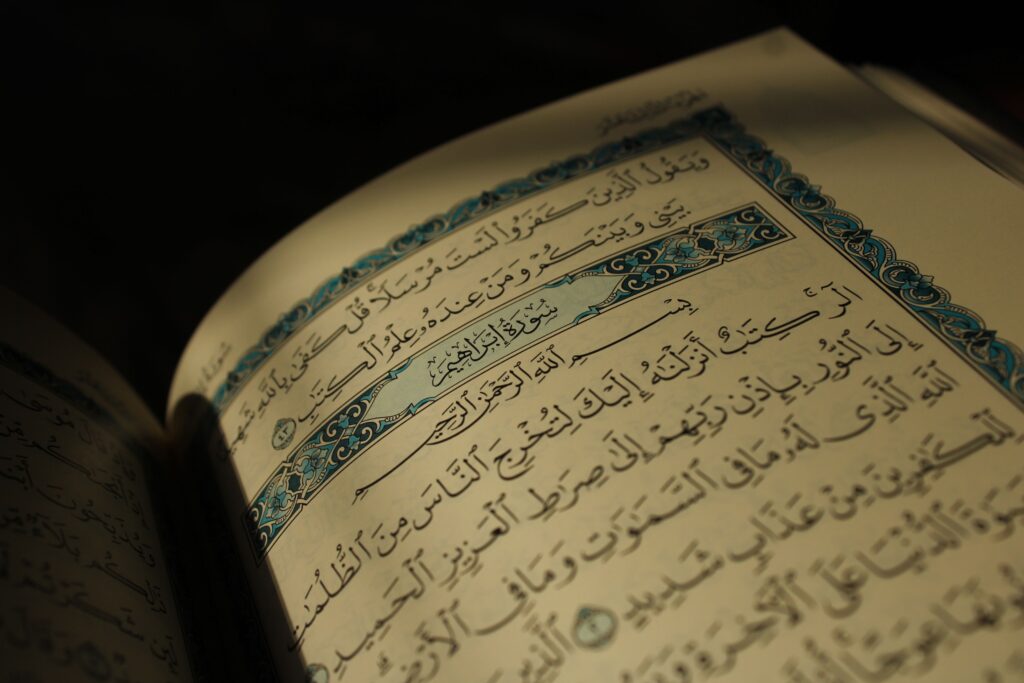
Islamic psychology names this with extraordinary precision. The Qur’an describes the nafs—the self, the ego, the soul—in stages. The nafs al-ammara is the self that commands toward excess, that wants without limit, that takes the whisper of desire and calls it need.[12:54] The nafs al-lawwama is the self-reproaching self—the conscience that awakens, the voice that begins to question the commands it once obeyed without thought. [75:3] And the nafs al-mutma’inna is the self at peace—the soul that has passed through the war and arrived, not at perfection, but at stillness. [89:28–31] A hadith reminds us that the greatest jihad is the jihad against one’s own self [al-Bayhaqi, Kitab az-Zuhd al-Kabir]—the war that matters most is the one fought inward, against the gravity of the ego.
The Buddhist tradition maps nearly the same terrain. What they call tanha—craving, thirst, the relentless wanting that pulls us from one distraction to the next—is identified as the root of suffering. The path to liberation runs not through acquiring more but through loosening the grip of a self that insists on acquiring.
The Stoics drew the same line differently but arrived at the same border. Epictetus—a former slave, a man who knew something about the limits of control—taught that the discipline of attention begins with distinguishing what is within our power from what is not. Most of what we suffer over belongs to the second category. The self that rages against what it cannot change is the self that has not yet learned where it ends and the world begins.
The vocabulary differs. The diagnosis is identical.
Impermanence and Letting Go
And then there is the question of time—of what remains, and what does not, and what we are meant to do with the knowledge that everything we hold will eventually slip from our hands.
The Qur’an offers one of the most striking formulations in any sacred text: “Everything will perish save His countenance.” [28:89] The verse does not soften itself. It does not say most things will perish, or earthly things, or things you do not care about. Everything. The sweep is total. And what remains—His countenance, the Divine—is precisely what cannot be grasped, possessed, or contained. The invitation is not to despair but to reorient: if everything passes, then clinging is not devotion but confusion. The only sane response to impermanence is to hold loosely.
The Buddhist tradition names this anicca—the understanding that all conditioned phenomena arise, persist briefly, and dissolve. Nothing you are looking at right now will exist in its current form forever. Including you. This is not morbidity. It is the ground from which compassion grows—because if everything is passing, then this moment, this person, this breath is unspeakably precious precisely because it will not last.
Marcus Aurelius—that same emperor—wrote of how Alexander the Great and his mule-driver were both reduced to the same thing by death. Not to diminish life, but to clarify it. If you carry the knowledge of your ending, you are less likely to waste what remains on what does not matter.
And in the Taoist tradition, the principle of wu wei—not inaction, but non-forcing, the art of moving with the current rather than against it—teaches a kind of grace in releasing. There is a strength in the open hand that the closed fist will never know.
“Four traditions. One truth. Hold loosely—not because nothing matters, but because everything does.”
The Question
If you have followed me this far, a question may be forming—one that the traditions themselves do not ask, but that we, standing at the intersection of all of them, cannot avoid.
If God sent warners to every people—and the Qur’an affirms this not once but repeatedly—then the wisdom found in these traditions is not foreign. It is not borrowed. It is not a lesser echo of the truth we hold. It is the truth, arriving through a different door. A hadith preserved in the Sunan of al-Tirmidhi tells us that “wisdom is the lost property of the believer; wherever he finds it, he has the most right to it.” [Sunan at-Tirmidhi, 2687] Wherever. Not wherever, so long as it is written in Arabic. Not wherever, so long as it comes from a Muslim. Wherever.
The Promised Messiah, peace be upon him, understood this—affirming that figures such as Buddha, Krishna, and Confucius were among those whom God sent to guide their peoples, expanding the horizon of prophethood beyond the boundaries that centuries of narrower interpretation had drawn [see A Message of Peace]. This was not a concession to other faiths. It was a deepening of Islam’s own claim to universality. And Hazrat Khalifatul-Masih V, may Allah be his Helper, has carried this principle forward, reminding us that “prophets appeared in all nations and religions” and that because all faiths share a divine origin, “there should be respect and reverence for each other’s faith”—not as diplomatic courtesy, but as theological obligation. [Serving Humanity Without Distinction, address at the inauguration of Baitul Aafiyat Mosque, Germany, April 10, 2017]
What, then, does intellectual humility demand of us? Not syncretism—not the lazy collapse of all traditions into a single undifferentiated whole where nothing means anything because everything means the same thing. The differences between these traditions are real. They matter. But perhaps what is demanded is something more difficult than either blind acceptance or defensive rejection: the willingness to recognize the fingerprints of the Divine wherever they appear, and the honesty to admit that our tradition—vast, beautiful, sufficient as it may be—does not hold a monopoly on the conversation between the human soul and its Creator.
This is not a radical position. It is, I would argue, a Qur’anic one.
I still read the Qur’an. I still find it inexhaustible. But I have learned that truth has a texture you recognize regardless of its container—the way you would recognize water whether it came from a spring in Mecca or a well in Kyoto or a river in Rome. The source is the same. The thirst is the same. And the refusal to drink because the cup is unfamiliar is not faithfulness.
It is fear.
There is a field, Rumi tells us, out beyond ideas of wrongdoing and rightdoing [The Essential Rumi, trans. Coleman Barks, p. 36, 2006 ed.]. I do not think he was speaking of moral relativism. I think he was speaking of the place where the argument stops and the recognition begins—where the language beneath the languages becomes, for a moment, audible.
The door is open. It has always been open.