

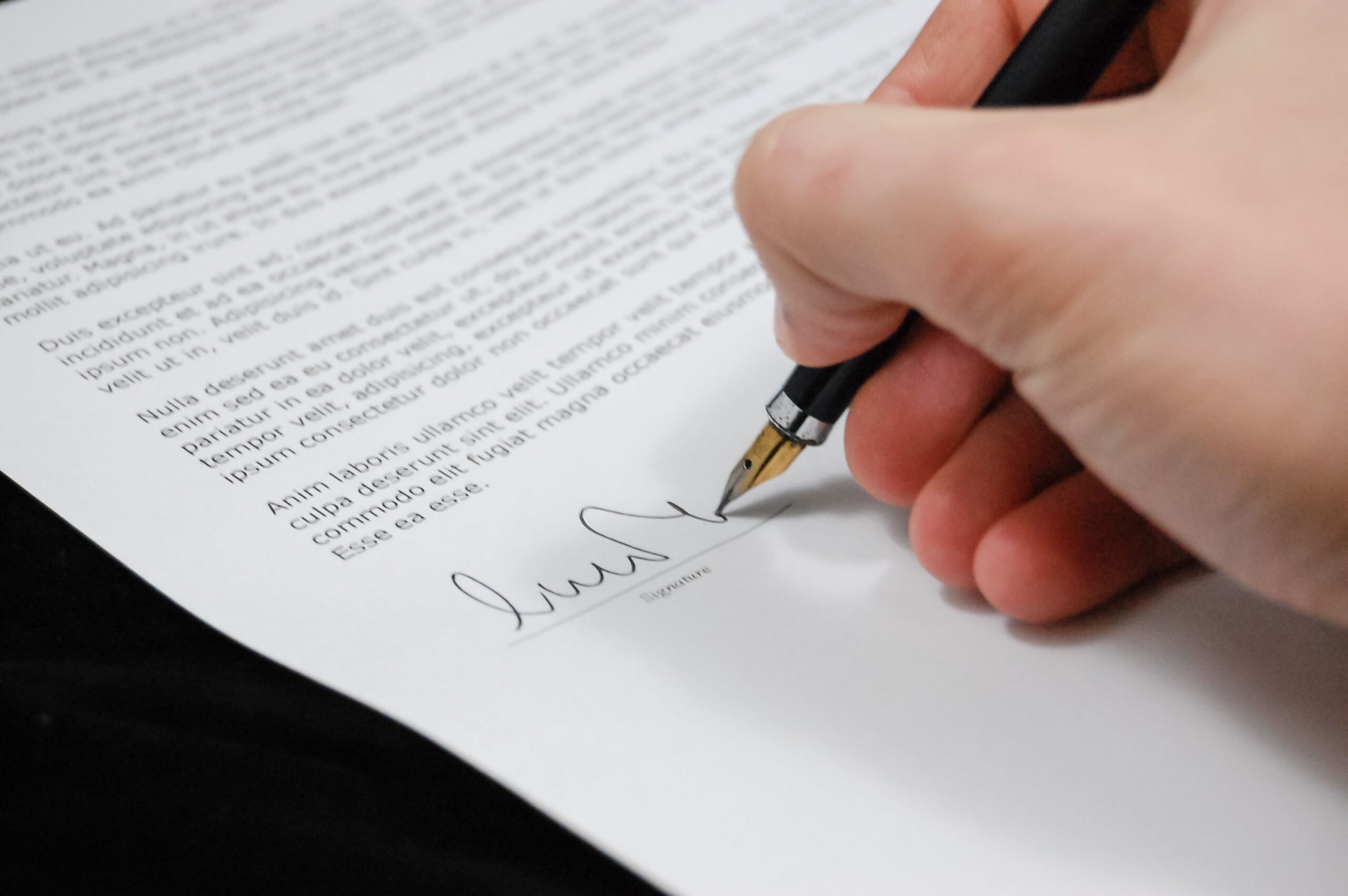
Someone wrote to Hazrat Khalifatul-Masih V (may Allah be his Helper), stating that two witnesses are required on the Wasiyyat form. She asked why a woman cannot serve as one of those witnesses. If, where women are to testify, two women are required, why is no such condition mentioned on the form? Moreover, why has no space been allocated on the form for two female witnesses?
Huzoor-e-Anwar (may Allah be his Helper) replied to this query in a letter dated February 20, 2024:
“Since men are generally more involved in matters of financial transaction, preference has been given to male testimony in such matters. However, if, in a particular case, men are not available to serve as witnesses and the matter is urgent, Islam has permitted the testimony of a woman in such a case of necessity as well. In that event, as a precaution, another woman is included alongside the female witness, so that if the witnessing woman forgets, the other woman may remind her of the actual matter.
“Previously, only male witnesses were entered on the Wasiyyat form and if a woman had to be included as a witness in some place, the signature of one additional woman was also obtained alongside hers. However, this has now been changed and, where men are not available, the testimony of one woman is also deemed equivalent to that of one man.
“Besides this, one should not create needless confusion in every matter and then try to link it to the Sharia. Filling in a form is not a command of the Sharia. Indeed, in the time of the Holy Prophet (peace and blessings of Allah be upon him), there were no forms or the like even for nikah. Rather, the process of proposal and its acceptance took place verbally and the witnesses also testified verbally. Moreover, people’s standard of truthfulness, righteousness [taqwa]and integrity was very high. Thus, a woman came to the Holy Prophet (peace and blessings of Allah be upon him) and requested khula [divorce]from her husband and she herself also stated that whatever her husband had given her was still with her. The Holy Prophet (peace and blessings of Allah be upon him) said that, in that case, she would have to return the mahr [dowry]she had received from her husband. The woman replied that she was willing to give even more than that. Upon this, the Holy Prophet (peace and blessings of Allah be upon him) said, ‘No more than that – simply return what you have taken.’ [Sahih al-Bukhari, Kitab at-talaq, Bab al-khul‘i wa kayfa t-talaqu fih; Sunan Abi Dawud, Kitab at-talaq, Bab al-khul‘; As-Sunan al-Kubra, Al-Bayhaqi, Kitab al-khul‘i wa t-talaq, Bab al-wajhi l-ladhi tahillu bihi l-fidyah, Part 7, p. 314]
“However, people no longer possess that standard of truthfulness and taqwa and many resort to falsehood in order to secure the most trivial worldly gains. Therefore, forms and written documents are prepared in order to avoid legal complications, so that in the event of disagreement or dispute, these documents may be presented as evidence.”
[Answers to Everyday Issues – Part 114, Al Hakam Weekly, June 15, 2026]