

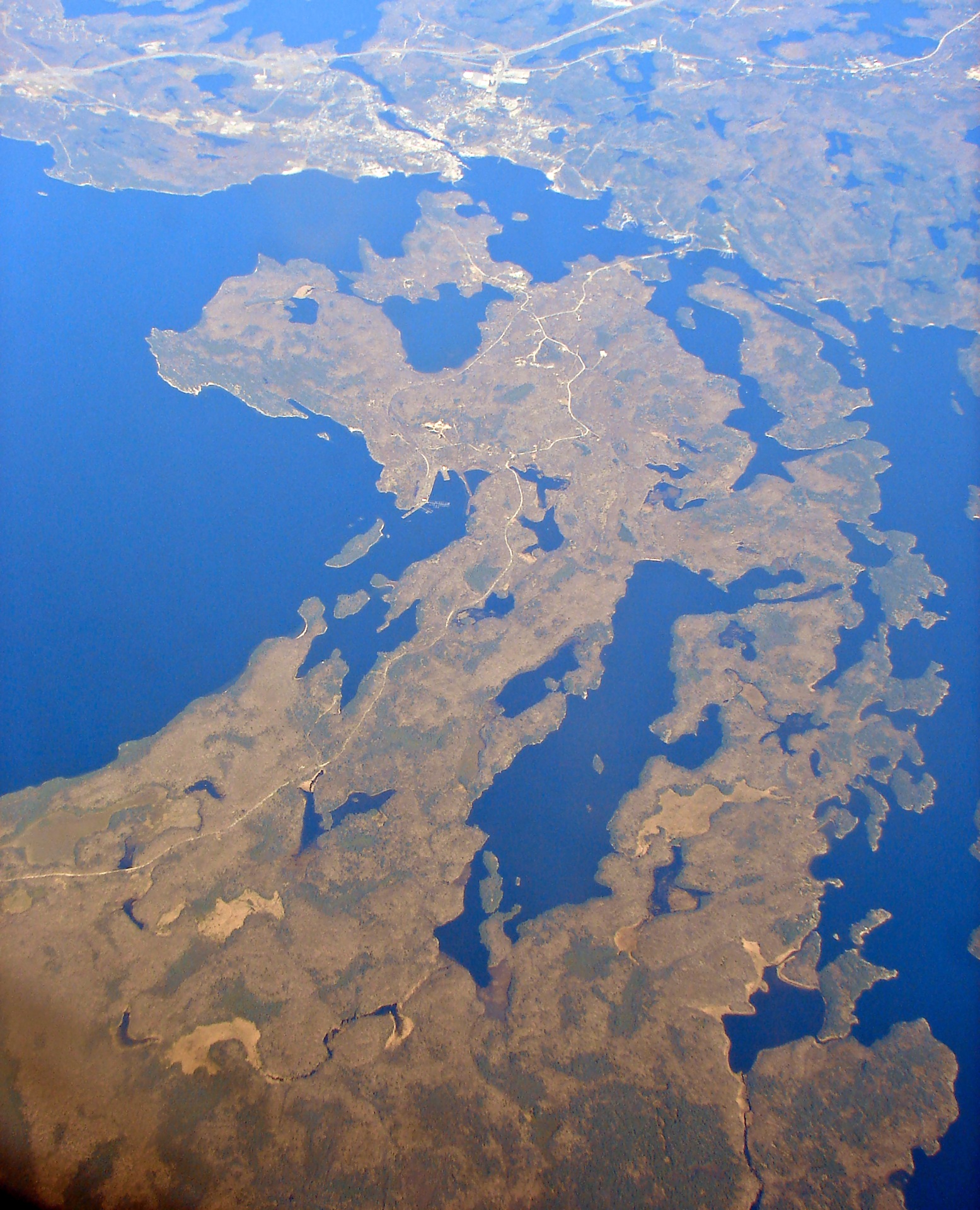
By the grace of Allah the Almighty, members of the Ahmadiyya Muslim Jama’at Canada had the honour of hosting representatives from the Wasauksing First Nation during a visit to the Baitul Islam Mosque complex on February 9, 2026. The program, which took place from 1:30 pm to 5:30 pm, was arranged by the Northern Ontario Indigenous Team and was attended by eight participants.
Wasauksing First Nation is an Ojibwe community located on Parry Island near Parry Sound, approximately 225 kilometres north of Vaughan. The community includes approximately 400–500 on-reserve residents and nearly 1,900 registered members, and its reserve spans roughly 7,800 hectares, making it one of the largest island-based First Nation communities in Ontario.
The visiting delegation included Chief Shane Tabobondung, Mathew Hupfield (Social Services Councillor), Zak (Youth Leader), and Lorna Pawis (Elder Women Leader). This marked the Chief’s second visit to Tahir Hall and the Baitul Islam Mosque; he had previously visited in December of the previous year with his son. On this occasion, additional council members accompanied him.
The Ahmadiyya Muslim Jama’at delegation was led by Luqman Mashhood Chattha, National Indigenous Desk In-Charge. Other members of the Northern Ontario Indigenous Team present included Murabbi Mahboob-ur-Rahman Sahib (Missionary, Hadiqa Ahmad), Zafar Ahmad Nadeem Sahib, and Adam Saeed Sahib (Secretary Tabligh, Barrie Holly Jama’at, and Nazim Tabligh, Majlis Ansarullah, Northern Ontario). Respected Sohail Mubarak Sharma Sahib, Missionary In-Charge, and Respected Jamil Ahmad Sahib, Regional Amir Northern Ontario, also joined parts of the program. The entire visit was recorded by MTA Canada.
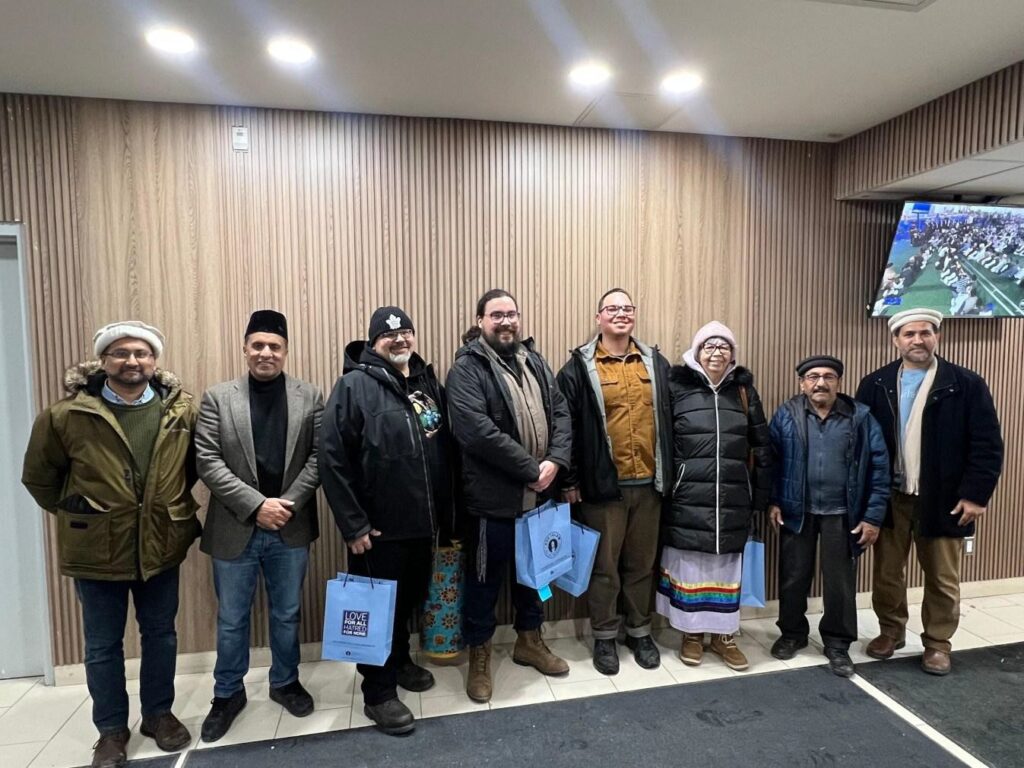
Members of the delegation at Aiwan-e-Tahir
The purpose of the visit was to strengthen ties and build a long-term relationship between the Wasauksing First Nation and the Ahmadiyya Muslim Jama’at, fostering mutual understanding and exploring opportunities for cooperation—particularly in programs for youth.
The guests were welcomed at Tahir Hall, where the meeting began with a smudging ceremony, a sacred Indigenous practice involving the burning of sage for spiritual cleansing. The ceremony was led by the visiting Youth Leader.
Following this, the guests toured the Baitul Islam Mosque and observed the Zuhr prayer from the gallery. Respected Sohail Mubarak Sharma Sahib explained the history of the Jama’at, the institution of Khilafat, and answered questions from the guests. Members of the delegation expressed interest in learning about Islamic congregational prayer, the practice of wudu (ablution), and the peaceful atmosphere of the Mosque.
During lunch, informal discussions took place on various topics, including the shared belief in the Oneness of God, narratives of the Great Flood, and the prophecies associated with Wovoka, a Native spiritual leader of the nineteenth century who spoke of peace and renewal among his people. The discussion also touched upon the solar and lunar eclipses that were cited as signs in the prophecies of the Promised Messiah (peace be upon him). Respected Jamil Ahmad Sahib joined the gathering during this portion of the program.
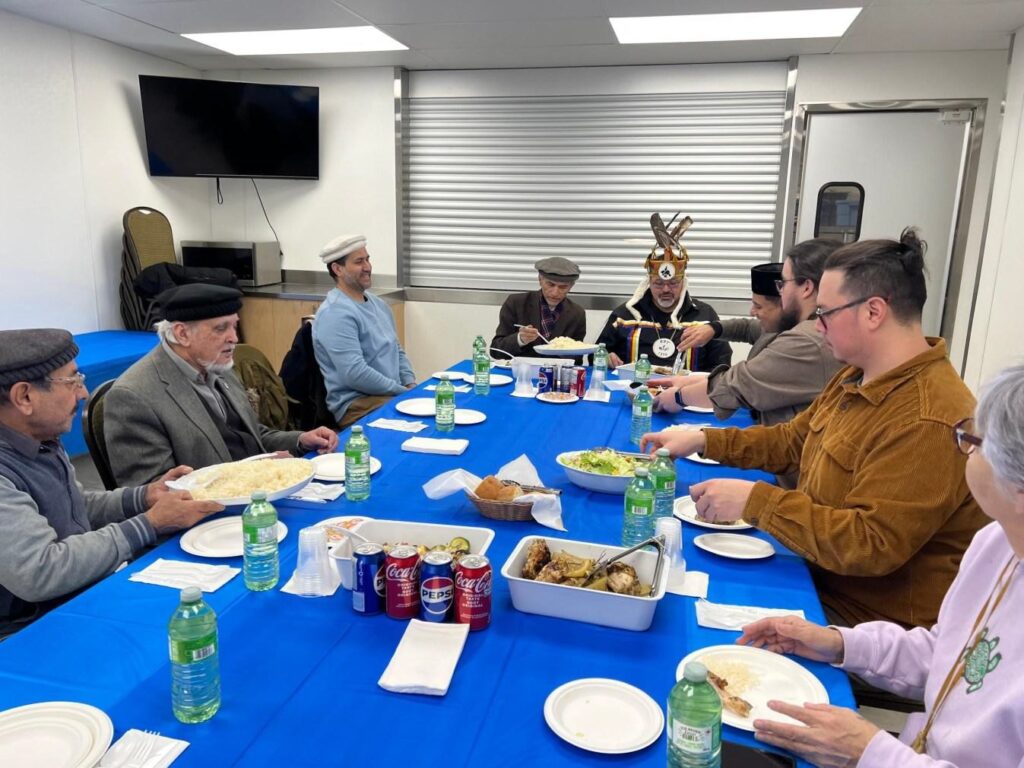
Members of the delegation were served lunch
After lunch, the group assembled in the boardroom, where a presentation was delivered outlining the Jama’at’s ongoing outreach and service initiatives with Indigenous communities across Canada. These efforts include youth programs, scholarships, volunteer initiatives, clean-water support through the International Association of Ahmadi Architects and Engineers (IAAAE), and educational workshops.
During the formal discussion that followed, both sides explored the possibility of organizing a Cultural Exchange Day, particularly focused on youth engagement. The proposed initiative aims to promote mutual understanding and help address social challenges affecting young people, including substance abuse and crime.
Participants also shared reflections on the hardships faced by their respective communities. Representatives of Wasauksing First Nation spoke about the lasting effects of cultural loss and historical trauma, including the notorious legacy of residential schools. Members of the Jama’at shared experiences of persecution faced by Ahmadis in certain parts of the world. These conversations fostered a deeper sense of empathy and mutual understanding. It was acknowledged that meaningful partnerships require time and trust; both sides agreed to begin with small youth-focused initiatives and gradually expand cooperation.
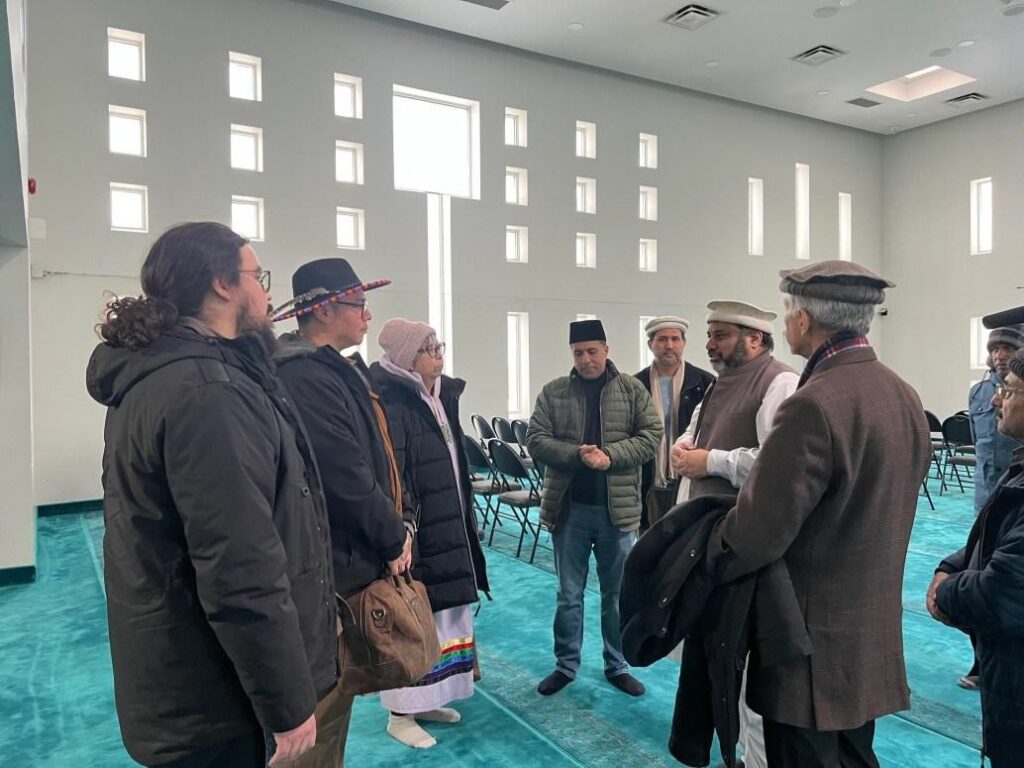
Missionary-in-Charge Sahib speaking to members of the delegation in Baitul Islam Mosque
At the conclusion of the visit, gifts were presented to the guests. Chief Shane Tabobondung extended an invitation to representatives of the Jama’at to visit the Wasauksing reserve during the summer months. He was also invited to attend the upcoming Jalsa Salana Canada, Insha’Allah.