

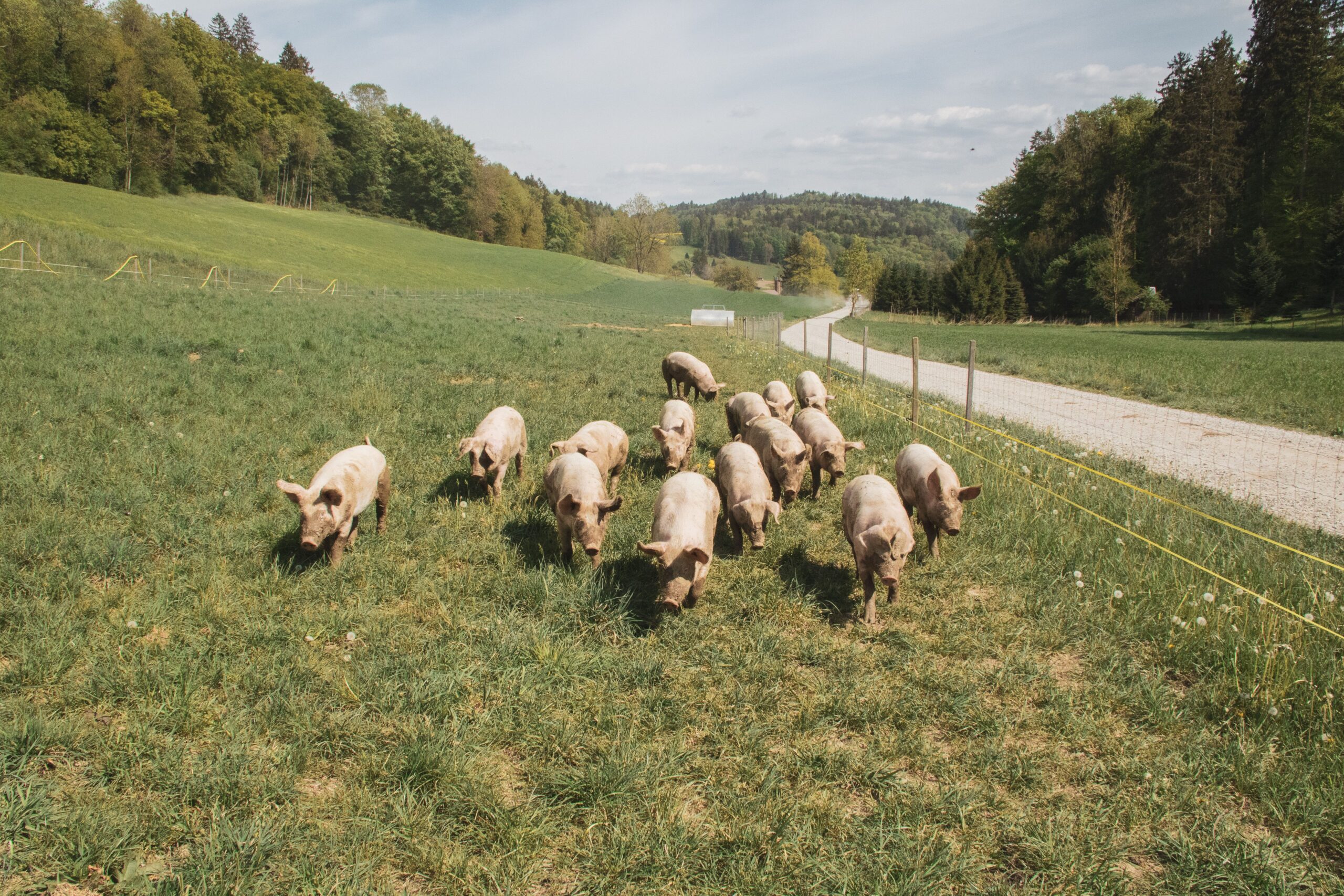
Under the guidance of Hazrat Khalifatul-Masih V (may Allah be his Helper), question-and-answer sessions are being held across Canada with Respected Amir Sahib. As not all questions can be addressed during these gatherings, selected questions and their answers, prepared by the National Tarbiyat Department, are published in the Gazette for readers’ benefit.
QUESTION: “Why did Allah make pigs even though we cannot eat them?”
ANSWER:
Allah the Almighty declares in the Holy Qur’an that nothing in His creation is without wisdom or purpose. Creation of Allah is not confined to a single human function such as consumption. Allah states:
وَ مَا خَلَقْنَا السَّمَآءَ وَ الْاَرْضَ وَ مَا بَيْنَهُمَا بَاطِلًا
And We did not create the heaven and the earth and all that is between them in vain. [38:28]
This fundamental Qur’anic principle applies to all aspects of creation, including animals whose consumption is restricted by divine law.
With regard to pigs, the Holy Qur’an is precise and limited in its prohibition. Islam does not forbid the animal itself, nor does it describe its creation as purposeless or evil. Rather, the prohibition relates specifically to eating its flesh. Allah the Almighty states:
اِنَّمَا حَرَّمَ عَلَيْكُمُ الْمَيْتَةَ وَ الدَّمَ وَ لَحْمَ الْخِنْزِيْرِ وَ مَاۤ اُهِلَّ بِهٖ لِغَيْرِ اللّٰهِ
He has made unlawful to you only that which dies of itself, and blood, and the flesh of swine, and that on which the name of any other than Allah has been invoked. [2:174]
The wording of this verse is deliberate and restrictive, clearly confining the prohibition to consumption.
This same principle is reiterated elsewhere in the Holy Qur’an. Allah commands the Holy Prophet Muhammad (peace and blessings of Allah be upon him) to proclaim:
قُلْ لَّاۤ اَجِدُ فِيْ مَاۤ اُوْحِيَ اِلَيَّ مُحَرَّمًا عَلٰى طَاعِمٍ يَّطْعَمُهٗۤ اِلَّاۤ اَنْ يَّكُوْنَ مَيْتَةً اَوْ دَمًا مَّسْفُوْحًا اَوْ لَحْمَ خِنْزِيْرٍ فَاِنَّهٗ رِجْسٌ اَوْ فِسْقًا اُهِلَّ لِغَيْرِ اللّٰهِ بِهٖ
Say, I find not in that which has been revealed to me aught forbidden to an eater who eats thereof except that it be that which dies of itself, or blood poured forth, or the flesh of swine—for that surely is foul—or what is profane, having been invoked in a name other than the name of Allah. [6:146]
Once again, the restriction concerns eating and does not negate the purpose or existence of the animal itself.
Islam further teaches that not everything Allah has created was intended for food. Many created things serve purposes beyond human diet, including maintaining balance in nature, providing utility, and offering signs for reflection. Allah reminds mankind:
هُوَ الَّذِيْ خَلَقَ لَكُمْ مَّا فِي الْاَرْضِ جَمِيْعًا
He it is Who created for you all that is in the earth. [2:30]
This verse affirms that creation serves humanity in diverse and sometimes indirect ways, under the guidance and limits set by divine law.
Notably, the Holy Qur’an does not declare that all uses of a pig are forbidden. The Qur’anic injunction concerns food consumption only. While Islamic jurisprudence may discuss issues of purity and lawful use in detail, the Qur’an itself does not describe the pig as useless or devoid of benefit. This distinction highlights an essential Islamic principle: prohibition applies to specific actions, not to Allah’s creation itself.
In conclusion, Allah created pigs as part of His wise and purposeful design, even though He prohibited the consumption of their flesh as food. This restriction serves as a means of spiritual discipline and obedience, not as a declaration that the animal is useless or wrongly created. As the Holy Qur’an affirms, Allah creates nothing in vain, and every aspect of His creation exists with wisdom, whether or not its benefit lies in human consumption