

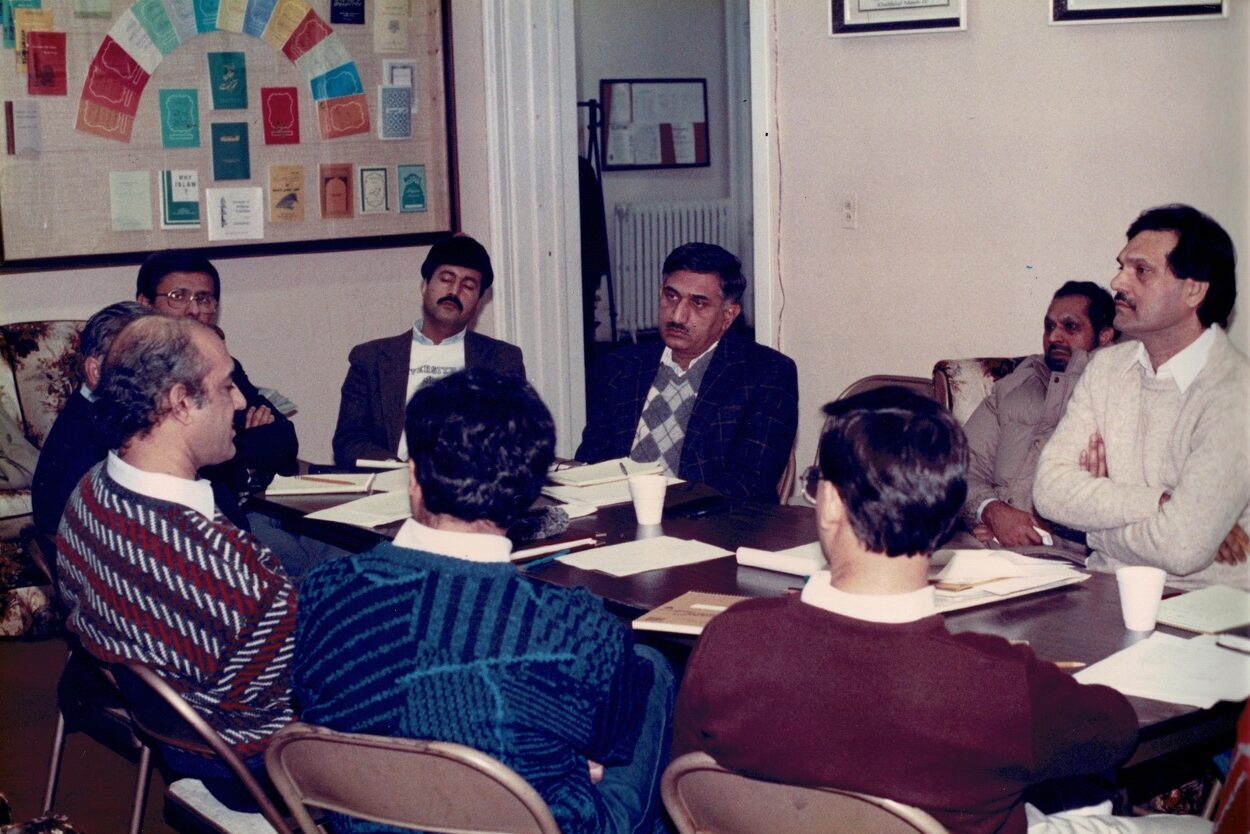
Every enduring structure relies on pillars that bear weight quietly, seeking neither spotlight nor acclaim. In the same way, the deep roots and sturdy trunks of mature trees anchor them against fierce winds, providing shade long after storms pass. Today, when Ahmadis travel across the globe and experience the seamless operation of digitized systems, bar codes, scanners, and computerized Tajnid and ID cards, it is easy to assume that things were always this way. Few may realize the immense toil, selfless sacrifices, and visionary efforts that sowed the early seeds of this technological leap decades ago. Brilliant ideas are never in short supply, but many remain unborn or unrealized. The seeds that truly endure and blossom into fruitful trees are those planted in the fertile ground of sincere devotion and selfless labour.
In the late 1970s, I had the privilege of working at the World Bank in the Economics Research as an economic researcher and Mining divisions as a financial analyst, where Hazrat Sahibzada Mirza Muzaffar Ahmad served in a senior executive capacity while I was in the early stages of my career. Despite the difference in our stations, Mian Sahib’s benevolence and paternal kindness were boundless; I frequently had the honour of accompanying him in his car for Friday prayers at the American Fazl Mosque in Washington, D.C.
Our bond was further deepened by mutual friendships with esteemed figures, though they were not Ahmadis each was very sympathetic to our beloved community, such as Air Marshal Rahim Khan, former World Bank Executive Vice President Moeen Qureshi, and noted cardiologist Dr. Riaz Haider. Later in my career, I served as a software engineer for NASA’s Space Shuttle program at the Kennedy Space Center in Florida, working on complex configuration management architectures. In addition, I had extensive professional experience with design and development at a major U.S. federal law enforcement agency, working with global computerized networks operating around the clock and impacting millions worldwide.
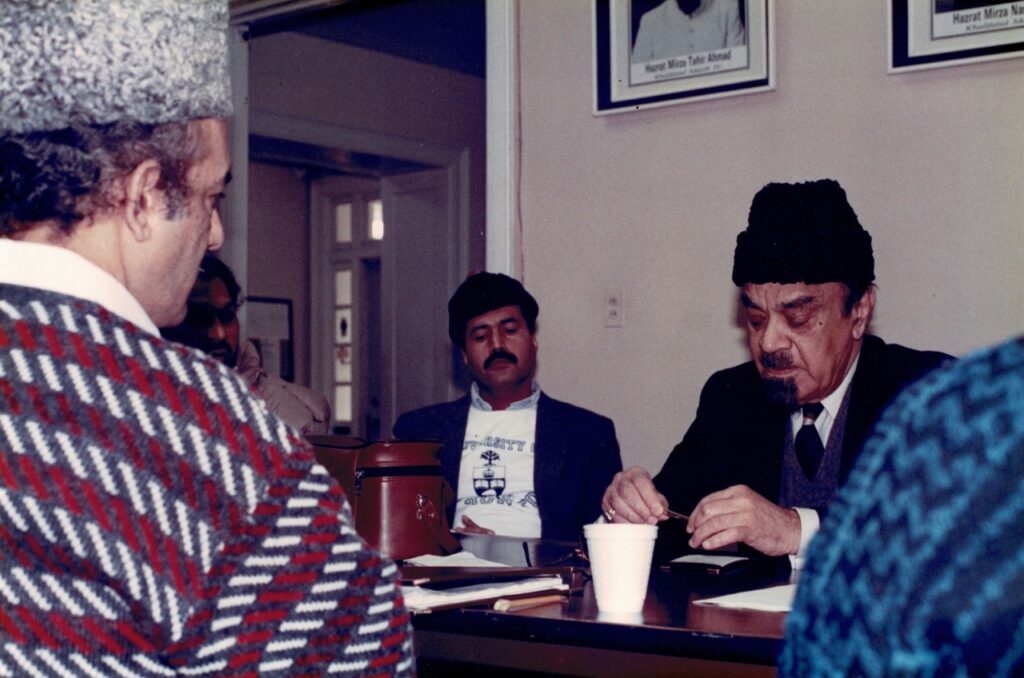
Life and professional experience have taught me that comparing apples to oranges is a perilous exercise. The monumental infrastructures of NASA or federal law enforcement agencies could never be directly equated with the needs of a voluntary religious community. When I was tasked with evaluating the computer system developed in Canada, I had to exercise mature technical judgment grounded in these realities.
During the tenure of the late Amir of the USA Jama’at, late Maulana Sheikh Mubarak Ahmad, respected Syed Abdul Majid Shah and I were directed to visit Canada to assess their newly developed computer system. In Toronto, I met respected Danial Khan and his loyal, devoted brother, respected Ilyas Khan. What I observed was extraordinary: they had built a comprehensive, culturally attuned, and practical system perfectly tailored to the community’s administrative and financial requirements.
In Danial Khan, his brother, and their dedicated team, I witnessed sincere devotion, technical competence, and the willingness to sacrifice countless hours selflessly for a worthy cause. Disregarding these achievements would have been sheer arrogance and foolishness on my part. Crucially, the visionary leadership and constant encouragement of the late Maulana Naseem Mahdi breathed vitality into the entire effort. His unwavering backing of Danial Khan and the team made all the difference.
Whenever I met Maulana Naseem Mahdi, I was fondly reminded of our first encounter in 1982 in Zurich, Switzerland, where my wife, our young children, and I stayed for two days en route to visit my parents in Lahore, Pakistan. Naseem Mahdi Sahib and his respected late wife were the most gracious hosts, treating us to dinner at the Mahmud Mosque. That same warmth and collaborative spirit were on full display as he helped bridge the efforts between the Canadian and U.S. teams.
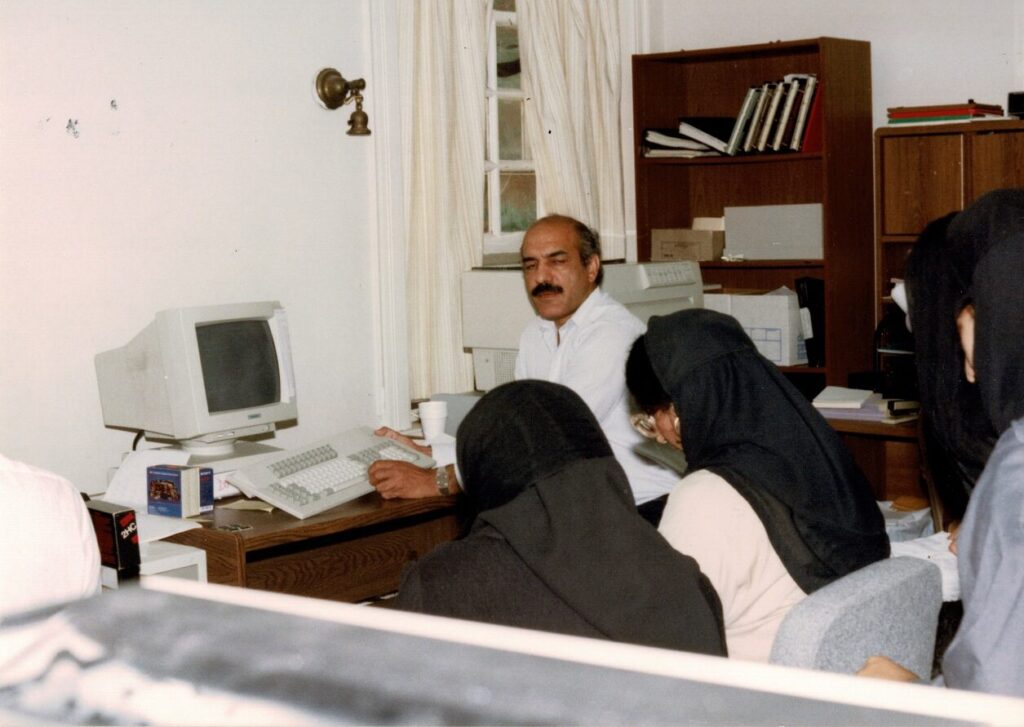
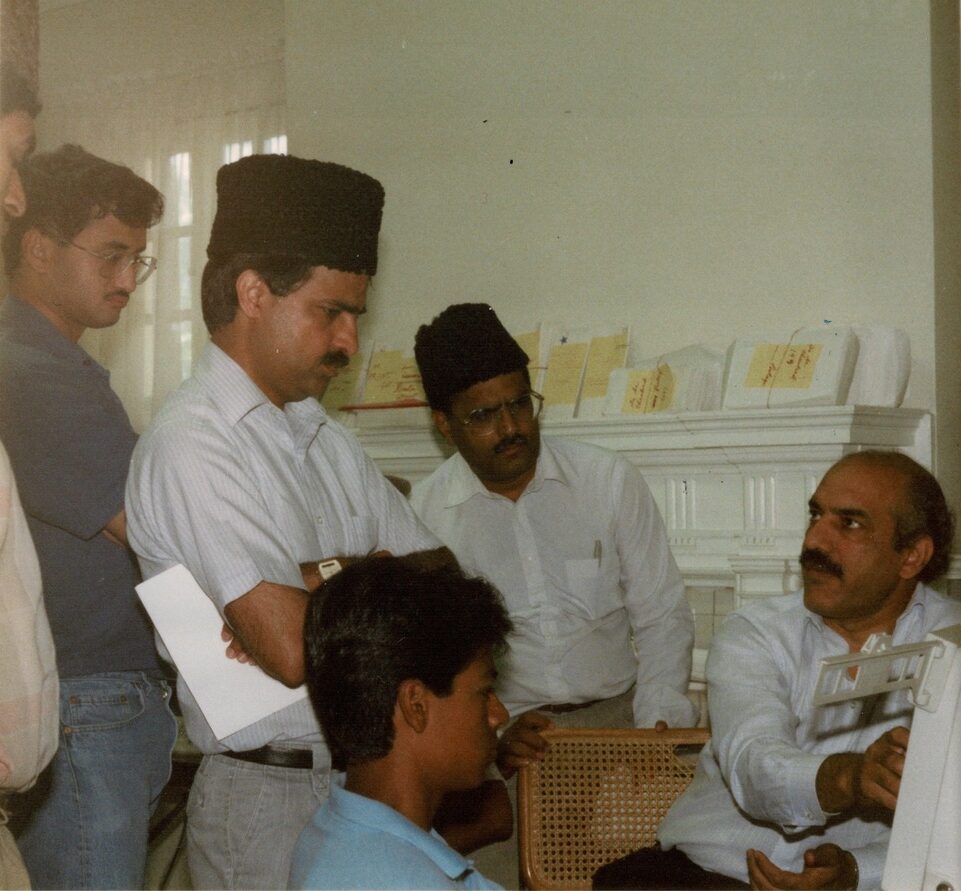
When Hazrat Mirza Muzaffar Ahmad assumed the leadership of the USA Jama’at, he sought counsel on modernizing the administrative infrastructure. I recommended adopting the tested Canadian system rather than reinventing the wheel. Mian Sahib accepted the recommendation with characteristic vision and entrusted me with the responsibility of implementing it across the United States. Experience has taught me that achieving meaningful progress often requires bold decisions and thinking outside the box. I suggested sending a substantial U.S. delegation to Canada to learn the intricacies of the system firsthand. With Mian Sahib’s approval, I had the honor of leading a delegation of about fifteen members who traveled by rented van to Toronto, spending several days in intensive training with the Canadian team.
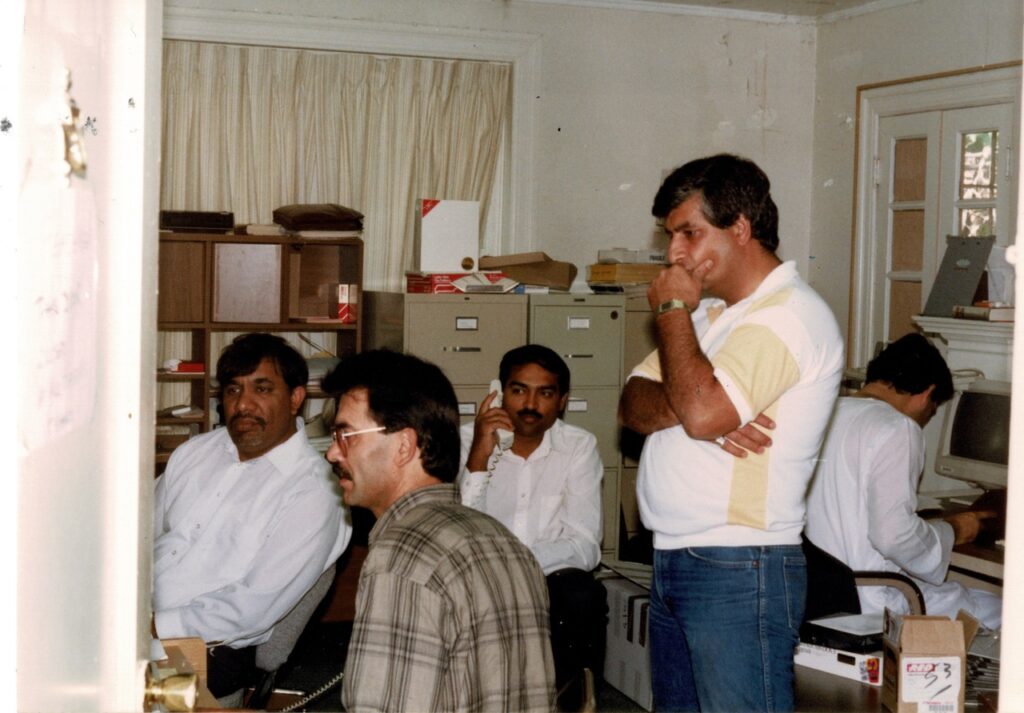
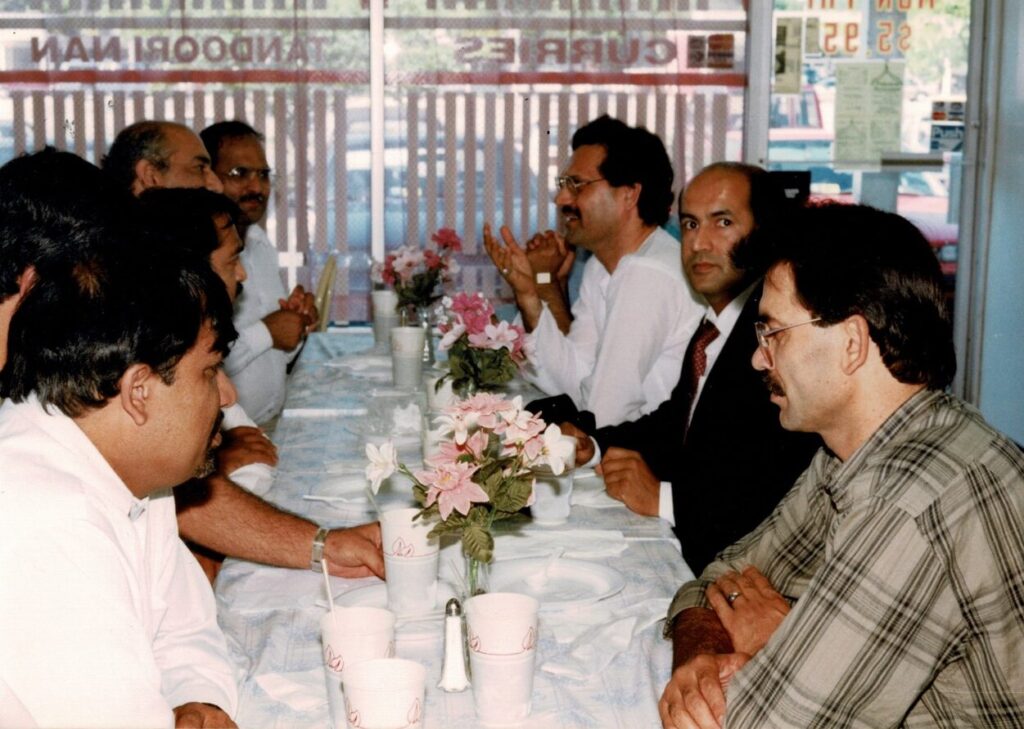
Left row: late Rafique Jadran Sahib, late Mansoor Muzaffar Sahib, Danial Khan Sahib and Syed Abdul Majid Shah Sahib;
Right row: Ilyas Khan Sahib Sahib, Author, Malik Mubarik Ahmad Sahib.
A tremendous asset in our delegation proved to be respected Malik Mubarak Ahmad, who served with distinction as the long-serving Financial Secretary of the USA Jama’at. A trained engineer working full-time with the Federal Government, Malik Mubarak Ahmad is a tireless, principled, and courageous worker. He has always been fearless in safeguarding community funds. On one occasion, he candidly called me out on an expenditure—a critique that may have stung momentarily, but in hindsight, earned my deepest admiration for his integrity and courage. The strength of our community rests on the shoulders of such upright and dedicated volunteers.
Back in the United States, establishing the system required tireless volunteer labor. Among those who answered the call, the late Rasheed Sabir stands out vividly. In his late sixties at the time, he possessed an insatiable thirst for knowledge, absorbing technical details like a sponge. Similarly, the late Mansoor Ahmad, who lived in the U.S., moved to Canada, and later returned to settle in Atlanta, Georgia, devoted countless hours to the project. Countless other volunteers contributed their energies, laying the groundwork for what would eventually evolve into a global, scanner-integrated digital infrastructure.
One major hurdle remained: convincing the wider membership and leadership of the system’s viability. Hazrat Mirza Muzaffar Ahmad provided pivotal patronage. When Danial Khan and his brother made their first trip to Washington for this project, Mian Sahib graciously hosted them at his personal residence in Potomac, Maryland.
To demonstrate the system’s capabilities, we loaded the heavy computer equipment into the back of my van and drove to the 1991 USA Jalsa Salana at the University of Michigan in Ypsilanti. There, alongside Danial Khan and the team, we conducted a live, functioning demonstration. That successful exhibition dispelled all lingering doubts, paving the way for the nationwide—and eventually worldwide—adoption of the system across national Jama’ats.
Reflecting upon the privilege of working alongside such dedicated pioneers, my heart fills with profound gratitude. I recognize in all these blessings the living fulfillment of the prayers and moral upbringing of my late parents, Lt. Colonel Aziz Ahmad and Begum Hamida Aziz.
As the Urdu poet aptly captured:
یہ سب تمہاری دعاؤں کا فیض ہے ورنہ
ہم ایسے اہلِ ہنر کہ ہنر میں کیا رکھا ہے
All this is the fruit of your heartfelt prayers; otherwise, what worth does the modest skill of this craftsman possess?
May Allah the Almighty abundantly reward all those devoted workers, volunteers, and elders who watered this blessed garden with their sincerity and selfless devotion. Ameen!