

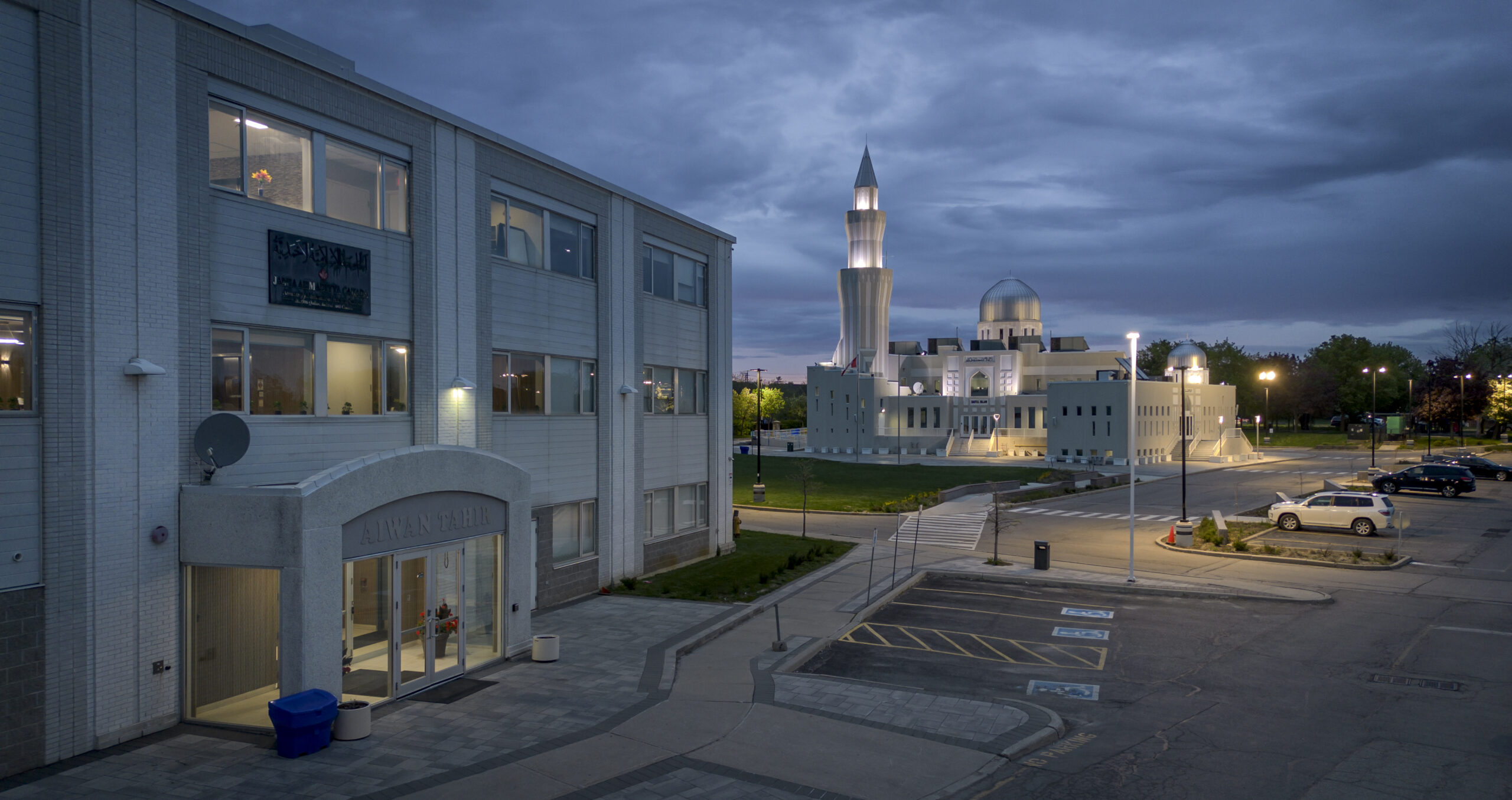
True religious service demands more than learning; it requires sincerity, sacrifice, and a deep connection with God. Jamia Ahmadiyya was founded to transform these ideals into reality by training missionaries who live Islam and present it with wisdom, patience, and love for humanity. Having fulfilled its purpose for nearly a hundred years, today we trace the roots of this institution and how it was first established.
Historical Background
During the time of the Promised Messiah (peace be upon him), there were originally only two schools in Qadian. One was a government-run lower primary school, and the other was run by the Arya community. The headmaster of the government school was coincidentally of the Arya faith. Both schools negatively impacted the Muslim students, as the staff of the schools would often openly criticize Islam and mislead students in respect of faith.
Regarding this, Hazrat Musleh-e-Mau’ud (may Allah be pleased with him) later recalled that he studied in that primary school for some time and once, his food came, and it was liver. Seeing this, the other students expressed their displeasure and said that since it was meat, it was unlawful to eat. This was the state of the government school, how openly the non-Muslim students were attacking the Muslim students. So, one can imagine what would have been the state of the Arya-run school.
Seeing the state of the schools in Qadian, the Promised Messiah (peace be upon him) expressed his desire and the urgent need to establish an Islamic school. On September 15, 1897, he published a pamphlet stating that to protect our children from the attacks of the opposing religions and to properly train them, an exemplary Islamic institution needs to be established where our children learn about Islam, its qualities, and learn how to respond to the allegations raised by opponents.
To achieve this, the Promised Messiah (peace be upon him) created a sub-committee responsible for providing staff, creating rules, and looking over administrative matters of this institution. The first meeting of the sub-committee was held on December 27, 1897, in which an administrative committee was created and Hazrat Maulvi Hakeem Noor-ud-Deen (may Allah be pleased with him) was appointed president.
Madrasa Ta’lim-ul-Islam
The committee decided that the school, called Madrasa (literally “school” in Urdu), would open on January 1, 1898. However, due to the Jalsa Salana, the school was inaugurated on January 3, 1898. Explaining the purpose of this Madrasa, the Promised Messiah (peace be upon him) once said that our purpose in establishing this is simply to give precedence to faith over worldly affairs. He said that the school also kept conventional education so that it may become a means to serve the faith.
The first headmaster of the Madrasa was Hazrat Sheikh Yaqub Ali Irfani (may Allah be pleased with him) and the first teachers were: Hazrat Bhai Abdur Rahman Qadiani, Hazrat Hafiz Maulvi Fazl Deen of Kharian and Hazrat Hafiz Ahmadullah (may Allah be pleased with them). The Madrasa started as a primary school, and in a few years it advanced a lot and was called Madrasa Ta’lim-ul-Islam, meaning school for Islamic teaching. Soon, it advanced to a middle school in 1898, a high school in 1900, and finally, in May 1903, it became Ta’lim-ul-Islam College.
The inauguration of the Ta’lim-ul-Islam College was planned for May 15, 1903, but postponed to May 28 due to the Promised Messiah’s health. The Promised Messiah (peace be upon him) couldn’t be present that day as well, so he sent Hazrat Maulvi Abdul Kareem of Sialkot (may Allah be pleased with him) with a message that I am sick right now and cannot walk, so it’s better for me to pray in Bait-ud-Dua while the inauguration is taking place. The proceedings took place in the chairmanship of Hazrat Maulvi Hakeem Noor-ud-Deen (may Allah be pleased with him) and Ta’lim-ul-Islam College was officially inaugurated. But due to certain restrictions by the government the college had to be closed after two years, though the Madrasa continued to operate.
Shakh-e-Deeniyat
In 1905, two close and devoted companions of the Promised Messiah (peace be upon him) passed away: Hazrat Maulvi Abdul Kareem of Sialkot on October 11, 1905 and Hazrat Maulvi Burhan-ud-Deen of Jhelum on December 3, 1905 (may Allah be pleased with them). The demise of these two distinguished scholars was a profound loss for the community and deeply affected the Promised Messiah (peace be upon him), as they were amongst his closest companions and devoted servants of the Community.
Allah the Almighty had already informed the Promised Messiah (peace be upon him) of this loss through a revelation on September 12, 1905: “دو شہتیر ٹوٹ گئے”, meaning “two pillars have collapsed.” The impact of their passing was so great that the Promised Messiah (peace be upon him) stopped sitting with members of the community in the evenings. When asked about the reason for this change, he explained that when he previously sat with the members, Maulvi Abdul Kareem would sit beside him, but now, when he sat and did not see him on his right side, his heart felt heavy. Due to this, he discontinued this practice.
After their demise, the attention of the Promised Messiah (peace be upon him) turned toward the need for an institution that could train eloquent scholars and devoted servants for the Community. On December 6, 1905, he expressed his concern that good members of the Community, such as Maulvi Abdul Kareem Sialkoti, Maulvi Burhan-ud-Deen, and some other scholars, were passing away, yet no worthy successors were being prepared. He further remarked that seeing the Madrasa Ta’lim-ul-Islam made him sad, as it was not fulfilling the purpose for which it had been established.
Hence, the Promised Messiah (peace be upon him) instructed certain members of the Community to present solutions so that the Madrasa could produce scholars who were well-versed in the Holy Qur’an and train students as religious preachers.
Some members recommended that the Madrasa Ta’lim-ul-Islam be permanently closed, and be replaced with a new school solely focused on religious studies. However, Hazrat Maulvi Hakeem Noor-ud-Deen (may Allah be pleased with him) and Hazrat Mirza Bashir-ud-Deen Mahmood Ahmad (may Allah be pleased with him) opposed this view, noting the significant effort already invested in establishing the Madrasa, and recommended making some changes in Madrasa Ta’lim-ul-Islam so that it fulfils the vision of the Promised Messiah (peace be upon him).
The Promised Messiah (peace be upon him) agreed with them and decided to start a branch of religious studies within Madrasa Ta’lim-ul-Islam. This branch, called Shakh-e-Deeniyat (lit. ‘branch of religious studies’), was inaugurated at the end of January 1906. Students who passed grade 5 were admitted to this branch, and the first batch had 10 students. Hazrat Qazi Syed Ameer Hussain Shah and Hazrat Hafiz Maulvi Fazl Deen of Kharian (may Allah be pleased with them) were appointed as the first teachers.
Jamia Ahmadiyya
Observing the success of Madrasa Ahmadiyya, Hazrat Mirza Bashir-ud-Deen Mahmood Ahmad, Khalifatul-Masih II (may Allah be pleased with him), realized that this institution was the primary means through which the Community could produce capable scholars and preachers. With a strong desire to ensure its continued success, he took practical steps to further develop it.
In 1919, he formed a committee to review and revise the existing scheme of Madrasa Ahmadiyya with the aim of transforming it into an Arabic college. The committee worked for two months and created a new scheme for the first 3 years of Madrasa Ahmadiyya.
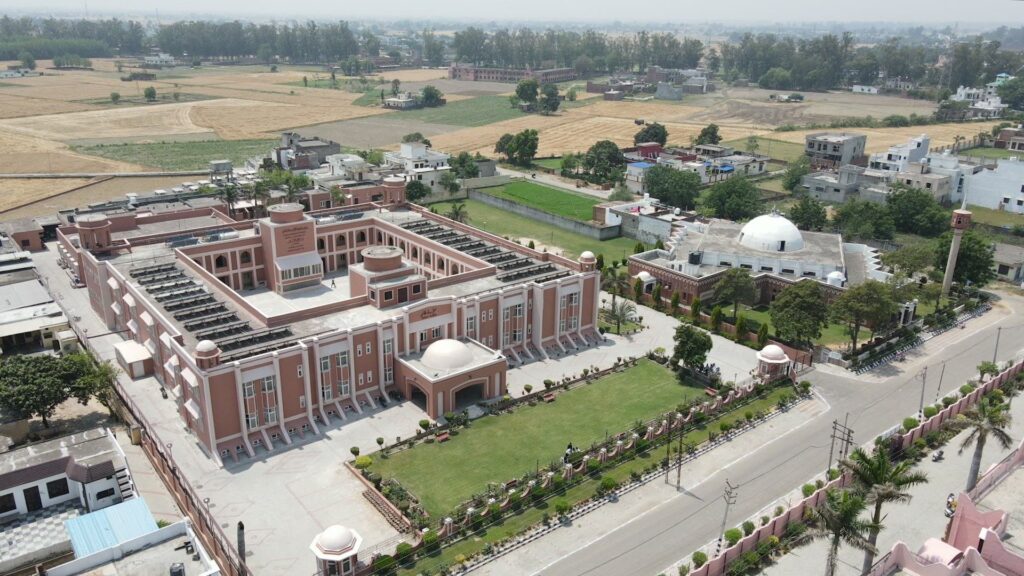
Later, in 1924, Hazrat Khalifatul-Masih II (may Allah be pleased with him) advised Sadr Anjuman Ahmadiyya to take concrete measures to turn the Madrasa into an Arabic college. Thus, after passing through several stages, on April 15, 1928, Sadr Anjuman Ahmadiyya established an institution named Jamia Ahmadiyya, which was inaugurated by Hazrat Musleh-e-Mau’ud (may Allah be pleased with him) on May 20, 1928. The Maulvi Fazil classes of Madrasa Ahmadiyya became the first two classes of Jamia Ahmadiyya, while the missionary class was divided into two sections. This restructuring resulted in the formation of Daraja Ula and Daraja Thaniya (Maulvi Fazil class of Madrasa Ahmadiyya) and Daraja Thalitha and Daraja Rabi’a (Missionary class of Madrasa Ahmadiyya).
The first principal of Jamia Ahmadiyya was Hazrat Maulana Syed Muhammad Sarwar Shah (may Allah be pleased with him). And the first professors were Hazrat Hafiz Roshan Ali (may Allah be pleased with him), Hazrat Maulvi Muhammad Isma’il Hilalpuri (may Allah be pleased with him), and Hazrat Mir Muhammad Ishaq (may Allah be pleased with him). On November 20, 1934, Hazrat Musleh-e-Mau’ud (may Allah be pleased with him) inaugurated the first hostel of Jamia Ahmadiyya, marking an important step in the institution’s development.
As the years progressed, Jamia Ahmadiyya continued to advance steadily, strengthening its academic structure and fulfilling its mission of producing devoted scholars and missionaries for the service of Islam. Following the partition of India and Pakistan, on November 10, 1947, the students and staff of Jamia Ahmadiyya migrated from Qadian to Lahore. After the migration, Madrasa Ahmadiyya and Jamia Ahmadiyya were merged into a single institution, which continues to function under the name Jamia Ahmadiyya.
Jamia Ahmadiyya has grown from its humble beginnings in Qadian into producing generations of devoted scholars, teachers, and missionaries. Its vision and dedication have ensured that the teachings of Islam are spread with wisdom, sincerity, and love for humanity. Today, Jamia Ahmadiyya has expanded to multiple countries, including India, Pakistan, Canada, the United Kingdom, Germany, and Ghana continuing to serve communities worldwide and fulfilling the mission of the Promised Messiah (peace be upon him).
References
Tarikh-e-Ahmadiyyat: Vol. 2, pp. 1–5, 302–304, 412-414; Vol. 3, pp. 278-285, Vol. 5, pp. 18-28
Samar Faraz Khawaja is a student of Jamia Ahmadiyya Canada.